The next day, there was a wedding in Cana, Galilee. Jesus’ mum, Jesus and his disciples were all there.
The wine was finished, and Jesus’ mum said to him, “They’re out of wine!”
Jesus replied, “What does this have to do with me, ma’am? My time hasn’t arrived.”
His mum said to the servants, “Do what he tells you to do.”
Six stone water jars were there for the Jew’s ceremonial cleaning. Each jar held about 80 or 120 litres.
Jesus said to the servants, “Fill the jars with water.” So the servants filled them to the top.
Jesus then instructed, “Take some out and give it to the party planner.” So they did.
The party planner tasted the water that had changed to wine. He didn’t know where it came from, but the servants did.
The party planner went to the groom and said, “People usually serve the good wine first and then the worse wine when they are drunk. You kept the good wine until now.”
This was the first miracle Jesus did at Cana, Galilee. It showed his glory, and his disciples trusted him.
Jesus then went down to Capernaum with his mum, brothers and disciples where they stayed for several days.
The Jews’ Passover was happening soon, so Jesus then went up to Jerusalem.
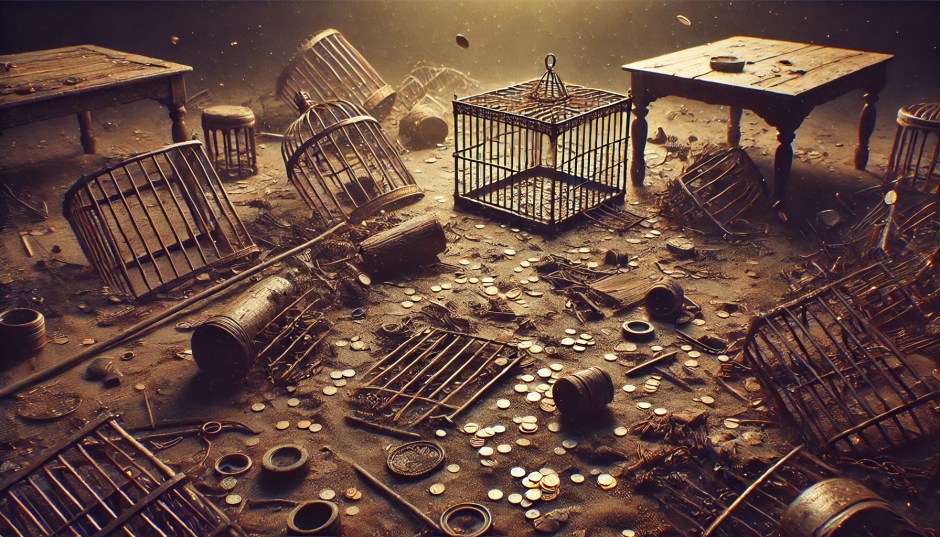
In the temple, Jesus found people selling cows, sheep and doves and found money exchangers sitting around. He made a rope whip and sent them out of the temple with the sheep and oxen. He tipped money exchanger’s coins out and tipped over the tables.
He said to the dove sellers, “Take these away. Don’t make my Father’s house a market.”
Jesus’ disciples remembered the quote, ‘Passion for your house will consume me.’
The Jews said to Jesus, “Show us a miracle to prove you are allowed to do these things.”
Jesus replied, “Destroy the temple, and I will raise it up in three days.”
“This temple has taken 46 years so far to be built. How will you raise it up in three days?” the Jews asked.
But Jesus was talking about his body as the temple.
When Jesus rose from the dead, his followers remembered this conversation, and trusted what had been written and what Jesus had said.
While Jesus was in Jerusalem during the Passover festival, many people believed in him, watching the signs he was doing. Jesus, however, didn’t entrust himself to them because he knew them, and he didn’t need anyone to testify about people. He knew what was in people.
John Chapter 2 Summary
Jesus attends a wedding in Cana with his mum and disciples. When the wine runs out, his mum asks him to help. Jesus tells the servants to fill six large stone jars with water, which he turns into wine. Later, Jesus goes to Jerusalem for the Passover. At the temple, he finds sellers and money exchangers doing business. He drives them out with a whip, overturning their tables and declaring that the temple is his Father’s house, not a marketplace. When the Jews demand a sign showing his authority, Jesus speaks of destroying the temple and raising it in three days, referring to his death and resurrection. Many people trust in Jesus because of his miracles, but he remains cautious, understanding people’s nature and not entrusting himself to them.
John Chapter 2 Bible Study Questions and Answers
1. What does the miracle at the wedding teach us about Jesus’ relationship with his mum and his response to needs?
Answer: This event shows Jesus’ respect for his mum and his willingness to respond to human needs, even if it initially seems unnecessary in the grander scheme of things. It shows the importance of listening to and helping others.
2. How can we apply the lesson of turning water into wine in our daily lives?
Answer: This miracle shows Jesus’ power to change the ordinary into the extraordinary. It encourages us to trust in Jesus’ ability to bring change, even in seemingly hopeless situations.
3. What does Jesus’ clearing of the temple teach us about places of worship?
Answer: Jesus’ actions in the temple teach the importance of keeping worship spaces holy and free from business activities. It reminds us to respect and honour our places of worship, making sure they remain devoted to their purpose.
4. How can Jesus’ statement about destroying and raising the temple in three days enhance our understanding of his mission?
Answer: Jesus’ statement reveals the deeper meaning of his mission, which is his death and resurrection as the start of new faith. It calls us to think about the significance of Jesus’ sacrifice and resurrection in our own faith journey.
5. Why do you think Jesus did not entrust himself to the people who believed in him because of his miracles?
Answer: Jesus knew the nature of human belief and understood that faith based solely on miracles might not be deep or lasting. This teaches us to seek a deeper, more personal relationship with Jesus rather than relying only on signs and miracles for our faith.
John Chapter 2 Explained
John Chapter 2 begins with Jesus attending a wedding in Cana, Galilee. The event is an important moment in Jesus’ ministry because it’s his first recorded miracle. When the wine runs out, Jesus’ mum, Mary, brings the issue to his attention, showing her trust in his divine capabilities. Jesus’ first response, “My time hasn’t arrived,” suggests there was a timetable for his public ministry, yet he still responds to the immediate need by turning water into wine. This act shows his care and the importance of honouring his mum’s request. The miracle not only saves the wedding celebration but also reveals Jesus’ divine glory, further helping his disciples to trust in him.
The chapter then shifts to Jerusalem, where Jesus attends the Passover festival. Upon entering the temple, he encounters a scene of business where people were selling animals for sacrifices and money exchangers were conducting business. This sight provoked Jesus to take action. He makes a whip and chases out the sellers and animals, overturns the tables of the money changers, and tells them off for turning his Father’s house into a marketplace. This clearing of the temple shows Jesus’ passion for keeping worship pure, and his authority over the temple. It serves as a call to respect and keep the purity of places dedicated to God.
When the Jews challenge Jesus, demanding a sign to prove he was allowed to chase them out, he vaguely replies, “Destroy this temple, and I will raise it up in three days.” This confuses the Jews, who take it literally, not understanding that Jesus is talking about his body. His prophecy refers to his death and resurrection. This conversation comes before the sacrifice Jesus would make and his victory over death, a truth his disciples only fully understand after his resurrection.
Throughout the Passover in Jerusalem, many people see Jesus’ miracles and believe in him. However, Jesus does not fully entrust himself to them, knowing that trust based just on signs isn’t very deep. He understands the complexities and often shallowness of human belief. This highlights Jesus’ sensitivity and the need for a deeper, more real faith that goes beyond seeing miracles to believe.
To read the next chapters, you might like to follow or subscribe to this blog!
Continue exploring John 2
If you’d like to read John xx in other translations, here are a few BibleHub links:
For a translation that aims to be word-for-word, try John 2 in the English Standard Version.
For a translation that aims to be more thought-for-thought, try John 2 in the New International Version.
For a translation that aims to communicate the overall meaning, try John 2 in the Contemporary English Version.
If you prefer to read the Bible in a hard-copy format, here are cheaper versions from Amazon:
[These are Amazon affiliate links which support the production of this blog]
For a translation that aims to be word-for-word, ESV Economy Bible
For a translation that aims to be more thought-for-thought, NIV, Economy Bible, Paperback: Accurate. Readable. Clear.
For a translation that aims to communicate the overall meaning, Holy Bible: Contemporary English Version
If you’d like to explore John in more depth, here are two commentaries I would recommend:
[These are Amazon affiliate links which support the production of this blog]
Easy to access commentaries that include life applications:
The NIV Application Commentary: John
Mark (The Story of God Bible Commentary)
For a commentary that goes into more depth:
The Gospel of John (The New International Commentary on the New Testament)
 Not My Life