Psalm 100 Prayer: Joyful Service and Enduring Faith

Heavenly Father,

With joyful hearts, we come before You, singing praises to Your name. We serve You with gladness, entering Your gates with thanksgiving and Your courts with praise. We give thanks to You and praise Your name.

For You are good, Lord. Your unfailing love continues forever, and Your faithfulness extends to all generations. You have made us, and we are Yours. We are Your people, the sheep of Your pasture.

In every moment, let us remember Your goodness and the joy of Your presence. Teach us to serve You with gladness, to embrace each day with a heart of gratitude. May our lives reflect Your love and faithfulness, spreading Your joy to those around us.

In Jesus’ name, we pray.

Amen.


To read more prayers, you might like to follow or subscribe to this blog!


Continue exploring Psalm 100

If you’d like to read Psalm 100, here are a few BibleHub links:
For a translation that aims to be word-for-word, try Psalm 100 in the English Standard Version.
For a translation that aims to be more thought-for-thought, try Psalm 100 in the New International Version.
For a translation that aims to communicate the overall meaning, try Psalm 100 in the Contemporary English Version.

If you prefer to read the Bible in a hard-copy format, here are cheaper versions from Amazon:
[These are Amazon affiliate links which support the production of this blog]
For a translation that aims to be word-for-word, ESV Economy Bible
For a translation that aims to be more thought-for-thought, NIV, Economy Bible, Paperback: Accurate. Readable. Clear.
For a translation that aims to communicate the overall meaning, Holy Bible: Contemporary English Version

Psalm 34 Prayer: Praising God Through Life’s Challenges

Heavenly Father,

In the multitude of life’s challenges, we turn to You, praising Your name always. We sought You, Lord, and You answered us; You delivered us from all our fears. Those who look to You are radiant; their faces are never covered with shame.

This poor soul cried, and You heard us, Lord, and saved us from every trouble. The angel of the Lord encamps around those who fear Him, and He delivers them. O taste and see that the Lord is good; blessed is the one who takes refuge in Him.

Fear the Lord, you His holy people, for those who fear Him lack nothing. Young lions may grow weak and hungry, but those who seek the Lord lack no good thing. Lord, teach us to fear You and to seek Your face always.

Keep our tongues from evil and our lips from speaking deceit. Let us turn from evil and do good; let us seek peace and pursue it. For Your eyes, Lord, are on the righteous, and Your ears are attentive to their cry.

In our struggles and joys, let us remember Your presence and providence. In Your righteousness, lead us and guide our steps. May we always find our strength and refuge in You, O Lord.

In Jesus’ name, we pray.

Amen.

To read more prayers, you might like to follow or subscribe to this blog!


Continue exploring Psalm 34

If you’d like to read Psalm 34, here are a few BibleHub links:
For a translation that aims to be word-for-word, try Psalm 34 in the English Standard Version.
For a translation that aims to be more thought-for-thought, try Psalm 34 in the New International Version.
For a translation that aims to communicate the overall meaning, try Psalm 34 in the Contemporary English Version.

If you prefer to read the Bible in a hard-copy format, here are cheaper versions from Amazon:
[These are Amazon affiliate links which support the production of this blog]
For a translation that aims to be word-for-word, ESV Economy Bible
For a translation that aims to be more thought-for-thought, NIV, Economy Bible, Paperback: Accurate. Readable. Clear.
For a translation that aims to communicate the overall meaning, Holy Bible: Contemporary English Version

Psalm 103 Prayer: Celebrating God’s Eternal Love

Heavenly Father,

In the vast canvas of Your love, we find endless reasons to praise You. You forgive all our sins and heal all our diseases. You redeem our lives from the pit and crown us with love and compassion. You satisfy our desires with good things, renewing our youth like the eagle’s.

Lord, as high as the heavens are above the earth, so great is Your love for those who fear You. As far as the east is from the west, so far have You removed our transgressions from us. Like a father has compassion on his children, so You have compassion on those who fear You.

You know how we are formed, remembering that we are dust. Our days are like grass; we flourish like a flower of the field, then the wind blows over it and it is gone. But Your love, O Lord, is from everlasting to everlasting on those who fear You, and Your righteousness with their children’s children.

Let us always remember Your precepts and follow Your paths. In Your righteousness and love, guide us each day. In the midst of life’s fleeting moments, let Your eternal love be our constant and our hope.

In Jesus’ name, we pray.

Amen.

To read more prayers, you might like to follow or subscribe to this blog!


Continue exploring Psalm 103

If you’d like to read Psalm 103, here are a few BibleHub links:
For a translation that aims to be word-for-word, try Psalm 103 in the English Standard Version.
For a translation that aims to be more thought-for-thought, try Psalm 103 in the New International Version.
For a translation that aims to communicate the overall meaning, try Psalm 103 in the Contemporary English Version.

If you prefer to read the Bible in a hard-copy format, here are cheaper versions from Amazon:
[These are Amazon affiliate links which support the production of this blog]
For a translation that aims to be word-for-word, ESV Economy Bible
For a translation that aims to be more thought-for-thought, NIV, Economy Bible, Paperback: Accurate. Readable. Clear.
For a translation that aims to communicate the overall meaning, Holy Bible: Contemporary English Version

Psalm 27 Prayer: Be My Guiding Light In Life’s Shadows

Heavenly Father,

In the quiet of this moment, I lift my heart to You. You are my light and my salvation, the stronghold of my life, and I seek refuge in Your embrace. In a world filled with shadows, Your light guides my steps. When fear tries to grip my heart, Your love casts it away. I am comforted by the thought of dwelling in Your house all the days of my life, gazing upon Your beauty and seeking You in Your temple.

Lord, hear my voice when I call; be merciful and answer me. My heart whispers of Your pursuit: “Seek His face.” Your presence, Lord, I seek. Do not hide Your face from me, do not turn Your servant away in anger. You have been my helper; do not reject me or forsake me, God my Saviour.

Even if my father and mother abandon me, I trust that You will hold me close. Teach me Your way, Lord; lead me on a straight path because of my oppressors. Do not hand me over to the will of my foes, for false witnesses rise up against me, spouting malicious accusations.

I remain confident of this: I will see the goodness of the Lord in the land of the living. Wait for the Lord; be strong and take heart and wait for the Lord.

In Your light, I see the shadows in my own heart. I confess the times I’ve turned away from Your love, choosing fear over faith. Forgive me, Lord, and guide me back to Your path of righteousness.

In my own struggles, I ask for Your strength. Help me to trust in Your timing and Your plan, to be patient in the waiting and strong in the face of uncertainty. Equip me, Lord, to be a beacon of Your love and peace to those around me.

I pray for those who are lost, those who walk in darkness without the light of Your love. Use me, Lord, to reach out to them, to show them Your compassion and grace. May my life reflect Your love and bring others into Your light.

And in all things, I give thanks. Thank you for Your unending love, for the peace that surpasses all understanding, and for the hope that is found in You. You are my light and my salvation, and in You, I find everything I need.

Amen.

To read more prayers, you might like to follow or subscribe to this blog!


Continue exploring Psalm 27

If you’d like to read Psalm 27, here are a few BibleHub links:
For a translation that aims to be word-for-word, try Psalm 27 in the English Standard Version.
For a translation that aims to be more thought-for-thought, try Psalm 27 in the New International Version.
For a translation that aims to communicate the overall meaning, try Psalm 27 in the Contemporary English Version.

If you prefer to read the Bible in a hard-copy format, here are cheaper versions from Amazon:
[These are Amazon affiliate links which support the production of this blog]
For a translation that aims to be word-for-word, ESV Economy Bible
For a translation that aims to be more thought-for-thought, NIV, Economy Bible, Paperback: Accurate. Readable. Clear.
For a translation that aims to communicate the overall meaning, Holy Bible: Contemporary English Version

Psalm 139 Prayer: In Your Light

Heavenly Father,

In the vastness of Your creation, we stand in awe of Your knowledge and presence. You have searched us, Lord, and You know us. You understand our thoughts from afar, intricately weaving us in our mother’s womb.

Before a word is on our tongue, You know it completely, O Lord. Such knowledge is too wonderful for us, too lofty for us to attain. Where can we go from Your Spirit? Where can we flee from Your presence? If we rise on the wings of the dawn or settle on the far side of the sea, even there Your hand will guide us, Your right hand will hold us fast.

You created our inmost being; You knit us together. We praise You because we are fearfully and wonderfully made; Your works are wonderful, we know that full well. Even the darkness will not be dark to You; the night will shine like the day, for darkness is as light to You.

Lead us in the way everlasting, O Lord. In Your love and wisdom, guide our paths. Help us to always remember that we are never hidden from Your sight, and in Your light, we find our true selves.

In Jesus’ name, we pray.

Amen.

To read more prayers, you might like to follow or subscribe to this blog!


Continue exploring Psalm 139

If you’d like to read Psalm 139, here are a few BibleHub links:
For a translation that aims to be word-for-word, try Psalm 139 in the English Standard Version.
For a translation that aims to be more thought-for-thought, try Psalm 139 in the New International Version.
For a translation that aims to communicate the overall meaning, try Psalm 139 in the Contemporary English Version.

If you prefer to read the Bible in a hard-copy format, here are cheaper versions from Amazon:
[These are Amazon affiliate links which support the production of this blog]
For a translation that aims to be word-for-word, ESV Economy Bible
For a translation that aims to be more thought-for-thought, NIV, Economy Bible, Paperback: Accurate. Readable. Clear.
For a translation that aims to communicate the overall meaning, Holy Bible: Contemporary English Version

Part Of God’s Plan – Reflections On When Good People Die

This is a stream of consciousness processing death of good people:

Are funerals to be a time of mourning or celebration?

Celebrate the life of the person.

Grieve their loss from our lives.

Celebrate that they can be joined with Jesus and fellow believers in heaven.

Grieve that we can no longer have their wisdom and goodness in our lives.

Celebrate all that we learned and the love we received from them.

Grieve that we can no longer show them love.

Are they in heaven as soon as they have passed, or are they waiting? Luke 23:43: “Truly I tell you, today you will be with me in paradise…” and 2 Corinthians 5:8, “We are confident, I say, and would prefer to be away from the body and at home with the Lord…” would suggest that those that pass get to be with God straight away, which is truly a comfort for those of us left behind.

The flavour of a funeral often reflects the life of the person just lived. Not to make sweeping statements but, in my experience, those who have had a large impact on others tend to have a funeral service where the eulogies are focused on how the person served others, rather than eulogies that focus on the person’s life events. How I hope that is how my own funeral plays out.

It is, of course, a tragedy that those who have an impact on others are taken at all. It takes a truly spiritually-strong person, who understands who God is, to lose a loved one and then announce ‘God is good’. To anyone who doesn’t understand God is, we see the loss of a life, especially one such as a pastor or someone who is constantly loving others, living righteously, and they see that as God being bad, confusing or possibly even ‘mean’.

God, however, never promises earthly comfort, or even that we deserve or are guaranteed a long life in this imperfect, broken world. What we are promised is eternal life. Revelation 21:4 says “He will wipe every tear from their eyes. There will be no more death or mourning or crying or pain, for the old order of things has passed away.”

I am admittedly very bad at singing in church. As soon as the music starts to a song that I have literally sung at least five hundred times as a church-goer since birth, my brain shuts off to the lyrics. It takes a change of context, like a funeral, to fully appreciate what I am singing:

No guilt in life, no fear in death
This is the power of Christ in me

From life’s first cry to final breath
Jesus commands my destiny

No power of hell, no scheme of man
Can ever pluck me from His hand

Till He returns or calls me home
Here in the power of Christ I’ll stand

(In Christ Alone by Stuart Townend)

I appreciate funerals for the reflection they necessitate on my own life, and the priorities that I have on this really short time we have on earth. The day after my own funeral, people aren’t going to care (or even know) about how much knowledge I had in my head; which video games I had played; which movies or TV shows I watched; which podcasts I listened to; which books I read.

I once heard a very eminent secular scholar suggest that the reason they do their research is so that they can ‘live on through their research outputs’. Regardless of the fact that their research is not in a field that is traditionally considered historically noteworthy (i.e. it is doubtful that their research outputs will remain relevant for many years after their death), there is also the delusion that legacy of work is really an achievement of immortality.

I would much rather my legacy of work be that of loving others here on earth, while living a truly immortal life with God with my brothers and sisters in Christ.

For those who have lost good people from their lives, “Blessed are those who mourn, for they will be comforted.” (Matthew 5:4). In other words, those who are grieving are loved, and God is there to comfort you.

Psalm 91 Prayer: Prayer For Protection And Peace

Dear Lord,

In the stillness of our hearts, we come before You, seeking the comfort of Your presence. You are our refuge, our fortress, in You we find trust and peace. As we walk through the shadows of life, we cling to Your promise of protection and safety. Your faithfulness, like a shield, guards our hearts and minds.

In the quiet of the night, when fears try to steal our peace, remind us that we need not fear the terrors of the dark, nor the uncertainties of the day. You are our guardian, ever-watchful, ever-present. Under Your wings, we find a haven, a place where fear has no hold.

We are grateful for Your promise that when we call on You, You will answer. In times of trouble, You are there, delivering us, honouring us with Your love and care. Lord, let us dwell in the knowledge that with You, we find long life and salvation.

Help us to rest in the assurance of Your protection, to live boldly and without fear. May we always remember that in You, we find strength and a safe harbour, now and forevermore.

Amen.

To read more prayers, you might like to follow or subscribe to this blog!


Continue exploring Psalm 91

If you’d like to read Psalm 91, here are a few BibleHub links:
For a translation that aims to be word-for-word, try Psalm 91 in the English Standard Version.
For a translation that aims to be more thought-for-thought, try Psalm 91 in the New International Version.
For a translation that aims to communicate the overall meaning, try Psalm 91 in the Contemporary English Version.

If you prefer to read the Bible in a hard-copy format, here are cheaper versions from Amazon:
[These are Amazon affiliate links which support the production of this blog]
For a translation that aims to be word-for-word, ESV Economy Bible
For a translation that aims to be more thought-for-thought, NIV, Economy Bible, Paperback: Accurate. Readable. Clear.
For a translation that aims to communicate the overall meaning, Holy Bible: Contemporary English Version

Mark Chapter 16 Simplified: No one believes Jesus is alive

The Sabbath finished. Mary Magdalene, James’ mum Mary, and Salome bought spices to go and put on Jesus’ body. They went to the tomb first thing on the first weekday when the sun rose.

Talking together, they said, “Who will roll the stone from the tomb’s entrance?”

They looked up and saw the stone had already been rolled; it was very large.

They entered the tomb and were alarmed to see a man wearing a white robe sitting on the right.

He said, “Don’t be worried. Looking for Jesus the Nazarene who was killed on a cross? He’s awake, not here. Look at the spot where they placed him. Go and tell his disciples, and Peter, that Jesus is going before you to Galilee. Meet him there, like he told you.”

They left and ran from the tomb because they were scared and amazed. They didn’t tell anyone because they were afraid.

After Jesus rose on the morning of the first weekday, he appeared, firstly, to Mary Magdalene, who had had seven demons expelled from her.

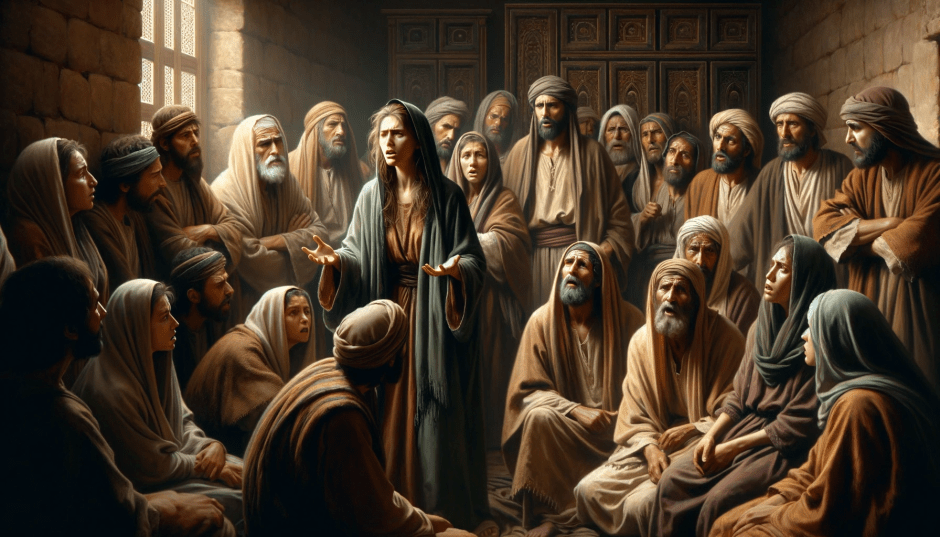
Mary left and announced it to the people who had been with him. They were grieving and crying. The people didn’t believe he was alive and that Mary had seen him.

After this, Jesus appeared looking differently to two of the disciples walking out in the countryside. They went and told the others but were not believed.

Later, the eleven disciples were sitting at the table when Jesus appeared. He told them off for their lack of belief and hard hearts because they didn’t believe the people who saw him after he had risen.

He said to them, “Go across the whole world and announce the good news to everything that has been created. Whoever believes and is baptised will be saved, but whoever doesn’t believe will be guilty. These signs will go with the believers: In my name, they will send out demons and speak in new languages. They will lift snakes, and if they drink anything deadly, it won’t hurt them. They will place hands on sick people and heal them.”

After speaking to them, the Lord Jesus was lifted into heaven and sat at God’s right.

The disciples left and preached everywhere. The Lord was helping them and confirming the messages through relevant miracles.

Mark Chapter 16 Summary

After the Sabbath, Mary Magdalene, Mary the mother of James, and Salome brought spices to anoint Jesus’ body. Arriving at sunrise on the first day of the week, they found the tomb’s large stone rolled away. Inside, a man in white told them Jesus had risen and instructed them to tell his disciples and Peter that He would meet them in Galilee. Frightened yet amazed, they fled the tomb and said nothing initially due to fear. Jesus first appeared to Mary Magdalene, who told the others, but they did not believe her. Jesus then revealed Himself to two followers in the countryside and later to the eleven disciples, telling them off for their disbelief. He commanded them to preach the Gospel globally, promising salvation to believers and miracles to accompany them, such as expelling demons, speaking new languages, and healing. Jesus then ascended to heaven. The disciples spread the word, performing miracles as God confirmed their message.

Mark Chapter 16 Bible Study Questions and Answers

  1. Why do you think the women were initially afraid to speak about Jesus’ resurrection?
    Answer: The women were likely overwhelmed by the supernatural event and feared disbelief or persecution. Their silence reflects our own hesitations to share our faith when faced with uncertainty or potentially being hurt or mocked.
  2. How can we find the courage to share our faith when we are afraid, as the women initially were?
    Answer: Taking inspiration from the women who eventually did share the news, we can pray for strength, seek support from fellow believers, and trust in the Holy Spirit to guide us in our sharing.
  3. What does Jesus’ approach to His disciples, who were doubtful, teach us about dealing with doubt in our own lives?
    Answer: Jesus’ caring yet straightforward approach with His disciples shows that while doubt is a natural part of faith, we must confront it and seek the truth.
  4. How can the miracles that accompany believers (like healing and speaking in tongues) be understood and seen in modern Christian living?
    Answer: These miracles can be seen as various forms of God’s work through believers, from physical healing to the less tangible, like offering comfort or understanding, and can be found through faith and prayer.
  5. What does Jesus’ command to preach to “everything that has been created” say about the Christian message?
    Answer: It emphasises that the good news is universal, meant for every person, regardless of background, and that as believers, we are called to be inclusive and share God’s love with all.

Mark Chapter 16 Explained

Mark Chapter 16 provides a powerful and victorious conclusion to the Gospel, depicting the resurrection of Jesus and the commands given to His disciples. The chapter begins with the women who followed Jesus, showing their commitment to care for Him even after His death. Their role as the first witnesses to the resurrection highlights the importance of faithfulness and the unexpected ways God can reveal Himself.

The initial reaction of fear and amazement from the women mirrors the human tendency to doubt and fear the unknown. Their silence is significant, representing the struggle between faith and fear—a theme that believers can understand as they navigate sharing their faith in a skeptical world. The angel’s message is clear and direct, highlighting that God’s promises are true and Jesus’s words are to be trusted.

Jesus first appears to Mary Magdalene, a person whom society had disregarded, showing His care and the transformative power of His presence. His appearance to the two followers on the road is a reminder that Jesus meets us in our everyday journeys, often in unexpected ways.

The encounter with the eleven disciples is particularly notable. Jesus tells them off for their disbelief, emphasising the necessity of faith. Yet, this is followed by a command, entrusting them with the task of spreading the good news. This shows that despite our flaws, we are called to serve a purpose in God’s plan.

The signs that follow believers serve as evidence of the divine power that accompanies the message of Christ. These signs are not just literal miracles but also represent the spiritual transformation and impact believers have in the world.

Finally, Jesus’ leaving for heaven and the disciples’ subsequent preaching underscores the transition from Jesus’ earthly ministry to the age of the Church, powered by the Holy Spirit.

In summary, Mark Chapter 16 is a call to action for all Christians. It invites us to experience the risen Christ, confront our doubts with faith, and carry the message of salvation to the world with the reassurance that God is with us.

To read the next chapters, you might like to follow or subscribe to this blog!


Continue exploring Mark 16

If you’d like to read Mark 16 in other translations, here are a few BibleHub links:
For a translation that aims to be word-for-word, try Mark 16 in the English Standard Version.
For a translation that aims to be more thought-for-thought, try Mark 16 in the New International Version.
For a translation that aims to communicate the overall meaning, try Mark 16 in the Contemporary English Version.

If you prefer to read the Bible in a hard-copy format, here are cheaper versions from Amazon:
[These are Amazon affiliate links which support the production of this blog]
For a translation that aims to be word-for-word, ESV Economy Bible
For a translation that aims to be more thought-for-thought, NIV, Economy Bible, Paperback: Accurate. Readable. Clear.
For a translation that aims to communicate the overall meaning, Holy Bible: Contemporary English Version

If you’d like to explore Mark in more depth, here are two commentaries I would recommend:
[These are Amazon affiliate links which support the production of this blog]
Easy to access commentaries that include life applications:
The NIV Application Commentary: Mark
Mark (The Story of God Bible Commentary)
For a commentary that goes into more depth:
The Gospel of Mark (The New International Commentary on the New Testament)

Mark Chapter 15 Simplified: Jesus is Killed

First thing in the morning, the chief priests, elders, law experts and the whole council came up with a plan. They tied Jesus, led him and gave him to Pilate.

Pilate asked Jesus, “Are you the Jew’s king?”

Jesus answered, “You say.”

The chief priests made many accusations against Jesus, so Pilate asked again, “Not going to answer anything? Look how much they are accusing you.”

But Jesus didn’t answer anything. Pilate was surprised.

During each feast, Pilate released to the people one prisoner they requested. Barabbas was in prison with the rebels who had committed murder during the rebellion. The crowd came and started asking Pilate to release a prisoner for them.

Pilate asked them, “Do you want the Jew’s king to be released?”

He saw the chief priests had delivered Jesus because of jealousy.

But the chief priests motivated the crowd to ask for Barabbas to be released. So Pilate asked again, “Then what do you want me to do with this one you name the Jew’s king?”

“Kill him on a cross!” they yelled.

“Because of what evil behaviour?” Pilate replied, but they yelled louder, “Kill him on a cross!”

So Pilate, wanting to make the crowd happy, released Barabbas to them.

Jesus was whipped and then sent to be killed on a cross.

The soldiers led Jesus to the palace, which is the governor’s house, and gathered the whole army cohort. They put purple clothes on Jesus, weaved a thorn crown and put it on him.

They started saying, “Hello, Jew king,” and they beat his head with a stick, spat on him and bowed down in front of him. After they mocked him, they took off his purple clothes and put his own clothes back on. They then led him to kill him on a cross. The soldiers forced someone passing by, Simon from Cyrene (Alexander and Rufus’ dad) who came from the countryside, to carry the cross.

They brought Jesus to Golgotha, which means ‘Skull Place’. They offered Jesus a wine and myrrh drink, but he didn’t have it. They crucified Jesus and distributed his clothes, gambling to see who should take the clothing. It was the third hour when they crucified Jesus. His charge was written as ‘The Jews’ king’. They crucified two rebels with him, one on the right and one on the left.

People passing by paid Jesus out, shook their heads and said, “Wow. You, the temple destroyer but will rebuild in three days, rescue yourself. Get down from the cross.”

The chief priests and the law experts also joked with each other, “He saved others but can’t save himself. The christ, Israel’s king; come off the cross now so we see and believe you.”

Those crucified with him mocked him.

The sixth hour came. Darkness came over the entire land until the ninth hour.

At the ninth hour, Jesus yelled loudly, “Eloi Eloi, lema sabachthani?”, which means, “My God, my god, why have you rejected me?”

Some people standing nearby heard this and said, “Look, he is asking for Elijah.”

Someone ran and filled a sponge with vinegar, attached it to a stick and gave it to Jesus. They said, “Leave him. See if Elijah comes and takes him down.”

Jesus gave a loud moan and died.

The temple curtain ripped into two pieces from top to bottom.

The soldier standing opposite Jesus saw he died like this and said, “This man really was God’s son.”

There were also women watching from afar, including Mary Magdalene, the younger James and Joses’ mother Mary, and Salome, who followed Jesus and served him in Galilee, and many other women who went with him to Jerusalem.

It became evening.

Because it was preparation day (the day before the Sabbath), Joseph of Arimathea (an important council member who was also waiting for the kingdom of God) daringly went to Pilate and asked for Jesus’ body.

Pilate was amazed he had already died. Calling the soldier, Pilate asked whether Jesus had already died. Pilate heard it was true from the soldier, so gave the body to Joseph.

Joseph bought linen sheets, took Jesus down and wrapped him in the sheets. He placed Jesus in a tomb cut into the rock and rolled a stone over the tomb’s entrance.

Mary Magdalene and Joses’ mum Mary saw where he was placed.

Mark Chapter 15 Summary

The chief priests and elders deliver Jesus to Pilate, accusing him of being the King of the Jews. Jesus does not defend himself against their accusations, which surprises Pilate. Pilate offers to release a prisoner during the feast, and the crowd, influenced by the chief priests, chooses Barabbas over Jesus. Despite Pilate’s reluctance, he agrees to the crowd’s demands to kill Jesus. Jesus is mocked, beaten, and dressed with a purple robe and a crown of thorns. Simon of Cyrene is forced to carry Jesus’ cross to Golgotha. There, Jesus is crucified alongside two rebels. As he hangs on the cross, he endures mockery from passersby and the religious leaders. At the ninth hour, Jesus dies, and the temple curtain tears in two. Joseph of Arimathea requests Jesus’ body from Pilate and, after confirmation of his death, buries Jesus in a tomb, which is then sealed with a stone.

Mark Chapter 15 Bible Study Questions and Answers

  1. What does Jesus’ silence before Pilate teach us about responding to unfair accusations?
    Answer: Jesus’ silence teaches us the power of humility and trust in God’s justice, even when falsely accused. It shows a deep sense of purpose and the willingness to accept suffering for a greater good, which can inspire Christians to remain firm in their faith during trials.
  2. How does the choice of Barabbas over Jesus reflect human nature, and what can we learn from it?
    Answer: The choice of Barabbas—a known rebel and murderer—over Jesus shows how easily people can be swayed by the crowd and choose wrongdoing over goodness. It suggests we think about our decisions and the influence of peer pressure on our lives.
  3. In what ways did Jesus’ treatment by the soldiers and the public challenge his identity as King, and how should this influence our understanding of what it means to be a true King?
    Answer: The mockery and abuse Jesus endured were a contrast to his true identity and mission. This contrast redefines being a true king as one characterised by service, sacrifice, and love. It encourages Christians to seek a deeper meaning in leadership and honour—through service rather than being dominating.
  4. How does the soldier’s recognition of Jesus as the Son of God after his death challenge our faith?
    Answer: The solider’s realisation came after seeing Jesus’ manner of death, which suggests we should consider how suffering can reveal power to us. It challenges Christians to recognise God not just in glory and power but also in moments of vulnerability and weakness.
  5. What lessons can we draw from Joseph of Arimathea’s courage in asking for Jesus’ body?
    Answer: Joseph’s actions show the courage to stand up for one’s beliefs, even in the face of potential consequences from authorities. It serves as an example to Christians to be bold in their faith and to take risks for what is right, especially in giving care to others.

Mark Chapter 15 Explained

In Mark Chapter 15, the story moves through the final stages of Jesus’ human journey, underlining themes of unfairness, sacrifice, and prophecies coming true. The chapter begins with Jesus before Pilate, where he faces accusations without defending himself, showing his acceptance of his role as the sacrificial lamb. His silence can be seen as a reflection of his inner peace and resolve, as well the fulfilment of Isaiah’s prophecy of a suffering servant.

Pilate’s interaction with Jesus and the crowd reveals the tension between political power and being morally right. Pilate appears to recognise Jesus’ innocence but ultimately agrees to the crowd’s demands. This highlights the weakness of human judgment and the ease with which justice can be swayed by public opinion, a cautionary reminder of the need for individual consideration and integrity.

The brutal mocking and torture Jesus endures at the hands of the Roman soldiers contrast sharply with the title placed above his head: “The Jew’s king.” The Gospel writer uses it to illustrate the upside-down nature of God’s kingdom, where the last will be first, and the first, last; where true power lies in humility and sacrifice.

The crucifixion scene is central to Christian theology, as it is the moment of Jesus’ sacrifice. The darkness that covers the land and the tearing of the temple curtain symbolise a shift in the religious landscape; the barrier between God and humanity is removed, signifying the new agreement through Jesus’ death.

The recognition of Jesus as God’s son by the Roman soldier, a Gentile, highlights the universal scope of Jesus’ mission. It signifies the breaking down of barriers between Jew and Gentile, inviting all into the family of God.

Joseph of Arimathea’s bold request for Jesus’ body and the burial fulfil the customs of honouring the dead and further prove the reality of Jesus’ death, which is essential for the coming claim of resurrection. His actions demonstrate the impact Jesus had on even those in positions of power and influence, challenging believers to act fairly and with compassion.

Overall, Mark Chapter 15 presents a mixture of human cruelty and powerful love, setting the stage for the hope and triumph that is to come in the resurrection.

To read the next chapters, you might like to follow or subscribe to this blog!


Continue exploring Mark 15

If you’d like to read Mark 15 in other translations, here are a few BibleHub links:
For a translation that aims to be word-for-word, try Mark 15 in the English Standard Version.
For a translation that aims to be more thought-for-thought, try Mark 15 in the New International Version.
For a translation that aims to communicate the overall meaning, try Mark 15 in the Contemporary English Version.

If you prefer to read the Bible in a hard-copy format, here are cheaper versions from Amazon:
[These are Amazon affiliate links which support the production of this blog]
For a translation that aims to be word-for-word, ESV Economy Bible
For a translation that aims to be more thought-for-thought, NIV, Economy Bible, Paperback: Accurate. Readable. Clear.
For a translation that aims to communicate the overall meaning, Holy Bible: Contemporary English Version

If you’d like to explore Mark in more depth, here are two commentaries I would recommend:
[These are Amazon affiliate links which support the production of this blog]
Easy to access commentaries that include life applications:
The NIV Application Commentary: Mark
Mark (The Story of God Bible Commentary)
For a commentary that goes into more depth:
The Gospel of Mark (The New International Commentary on the New Testament)

Mark Chapter 14 Simplified: Jesus’ Arrest and Trial

Two days later was the Passover and the bread feast. The chief priests and law experts looked for how they could secretly arrest and kill Jesus. They said, “Not during the feast so the people don’t riot.”

Jesus was at Bethany in Simon, the sick man’s, house. He was sitting at the table when a woman arrived with an alabaster bottle of expensive, pure nard perfume. She broke the bottle and poured it on his head.

Some of the others were outraged together and asked, “Why waste this perfume? This perfume could have sold for more than 300 coins and donated to the poor.”

They told her off.

Jesus said, “Let her be. Why are you bothering her? She did a kind thing to me. You always have poor people around you and can do kind things for them whenever you want but you won’t always have me. This is what she can do, getting my body ready for being buried. I’m honestly telling you, what she did will also be told to remember her wherever the good news is told in the entire world.”

Judas Iscariot, one of the twelve, went to the chief priests to give Jesus to them.

They gladly listened and promised to give him money. Judas looked for an opportunity to hand Jesus over.

On the first day of the bread feast, when they sacrificed the lamb, Jesus’ disciples asked, “Where do you want us to prepare, for you to eat the lamb?”

He sent two disciples and told them, “Go into the city, and a man carrying a water jar will meet you. Go with him. Wherever he enters, tell the owner, ‘The teacher asks, where is my room where I can eat the Passover with my disciples?’ The owner will show you a large upstairs room set up and ready. Prepare in that room.”

The disciples went to the city and found it just like Jesus told them, and they got the Passover meal ready.

In the evening, Jesus came with the twelve. They sat and ate.

Jesus said, “Honestly I’m telling you, one of you eating with me will betray me.”

They started getting upset and said to Jesus one by one, “Not me.”

But Jesus said, “It is one of the twelve, who is dipping into the bowl with me because the Son of Man is leaving like it is written about him. But I feel sorry for the person who will betray the Son of Man. Better if that man hadn’t been born.”

As they ate, Jesus took bread, blessed it, broke it and gave it to them, saying, “Take this. It’s like my body.”

He took the cup, blessed it and gave it to them. They all drank from it. Jesus said, “This is like my blood of the agreement that is spilled for many people. I’m honestly telling you I won’t drink the vine fruit anymore until the day I drink it new in God’s Kingdom.”

They sang the Passover song and went to the Mount of Olives.

There, Jesus said to them, “All of you will fail, because it is written, ‘I’ll hit the shepherd and the sheep will scatter.’ But after I awake, I’ll go before you into Galilee.”

Peter said, “If they all fail, I won’t.”

Jesus replied, “Honestly I’m telling you, tonight, before the rooster crows twice, you will deny that you know me three times.”

But Peter stressed, “If I must die with you, I won’t deny you.”

They all also said the same thing.

They then went to a place called Gethsemane. Jesus said to his disciples, “Sit here while I pray.”

He brought Peter, James and John with him and began to be concerned and troubled. He said to them, “I am very sad to death. Stay here and awake.”

Jesus continued on further, then fell on the ground and prayed for, if possible, the time to pass by.

He said, “Abba, Father. Everything is possible for you. Take this cup from me, but not what I want, but what you want.”

Jesus returned and found the disciples asleep. He said to Peter, “Simon, are you asleep? Couldn’t you be awake for one hour? Be awake and pray that you don’t get tempted. The spirit is ready but the body is weak!”

Jesus left again and prayed, saying his message.

He returned again to find them asleep, because they were tired, and they didn’t know how to answer him.

Jesus returned a third time and said, “Still asleep and having a rest? Enough! The time has come. Look, the Son of Man is being sent to sinners’ hands. Get up, let’s go. Look, my betrayer is coming.”

Judas arrived at that moment while Jesus was still talking. Judas was with a crowd with swords and sticks, including the chief priests, law experts and elders.

The deliverer had told them a signal, “I will kiss him. Capture him and securely take him away.”

Judas arrived, came straight up to Jesus and said, “Teacher,” and kissed him, so they grabbed and arrested Jesus.

Someone standing nearby drew his sword, hit the high priest’s slave and cut off his ear.

Jesus said to them, “Come to arrest me, like I’m a criminal, with swords and sticks? I was with you every day in the temple teaching and wasn’t arrested, but this happened so the writings will be fulfilled.”

Those with Jesus left him and ran away.

A young man, wearing just some cloth on his body, was following Jesus, and they grabbed him, but he dropped the cloth and ran away naked.

They led Jesus to the high priest’s house. All the chief priests, elders and law experts gathered there.

Peter followed Jesus inside from afar, into the high priest’s courtyard. He sat with the servants and got warm by the fire.

The chief priests and the council couldn’t find witnesses against Jesus to kill him. Many gave fake testimonies against Jesus, but the testimonies were inconsistent. Some people got up with fake testimonies against Jesus and said, “We heard him say ‘I’ll destroy this man-made temple and will build a non-man-made one in three days.”

Their testimonies about this were not consistent.

The high priest got up in the middle of them and asked Jesus, “Don’t you have a reply? What are these testimonies against you?”

But Jesus was silent and didn’t reply.

The high priest asked him again, “Are you the Christ? Son of the Blessed?”

Jesus replied, “I am. You’ll see the Son of Man sitting at the right of the Power and come with the heavenly clouds.”

The high priest ripped his clothes. “Why do we still need witnesses? You have heard the slander. What does it look like to you?”

They all declared him worthy of death.

Some people started spitting on him, covered his face and punching him. They said to him, “Prophesy.” The guards took him and hit him.

Peter was down in the courtyard.

One of the high priest’s servant girls arrived. She saw Peter getting warm and stared at him. She said, “You were also with the Nazarene, Jesus.”

But Peter denied it and said, “I don’t know or understand what you mean.”

He went out to the gate. A rooster crowed.

The slave girl watched him and started saying again to others nearby, “He is one of them.”

Peter denied it again.

A little later, those standing nearby said to Peter, “You are one of them because you are also Galilean. Your accent is obvious.”

Peter started swearing and promised, “I don’t know this man you are talking about.”

A rooster crowed a second time.

Peter remembered what Jesus had said; “Before the rooster crows twice, you’ll deny knowing me three times.”

Peter fell down and cried.

Mark Chapter 14 Summary

It begins with the chief priests and law experts planning to arrest Jesus secretly, fearing public uproar. At Bethany, a woman anoints Jesus with expensive perfume, which Jesus defends as preparation for his burial, predicting that the act will be remembered. Judas Iscariot agrees to betray Jesus for money. During the Passover meal, Jesus reveals that one disciple will betray him and predicts Peter’s denial before the rooster crows twice. Jesus starts the Last Supper rituals, symbolically sharing bread and wine as his body and blood. After, they go to Gethsemane, where Jesus prays intensely while his disciples struggle to stay awake. He is betrayed by Judas and arrested despite his peaceful protests. Jesus goes before the high priest, where false testimonies fail to accuse him. Jesus confirms his identity as the Christ and is sentenced to death, mocked and abused. Meanwhile, Peter, who followed at a distance, denies knowing Jesus three times, fulfilling Jesus’ prediction, which leaves Peter devastated.

Mark Chapter 14 Bible Study Questions and Answers

  1. What does the woman’s act of anointing Jesus with expensive perfume teach us about worship and sacrifice?
    Answer: It teaches that true worship often involves sacrifice and giving our best to God, even if others may not understand or approve. It’s a personal expression of devotion and may not always seem practical, but it holds great value in God’s eyes.
  2. How can we prepare our hearts to be faithful, as Jesus requested of His disciples in the Garden of Gethsemane?
    Answer: We can prepare our hearts by spending time in prayer, seeking God’s will over our own, and being careful against temptation. Regular self-examination and spiritual disciplines can help us stay spiritually alert.
  3. In what ways do we sometimes betray Jesus as Judas did, and how can we avoid such betrayal?
    Answer: We betray Jesus when we choose sin over obedience, deny Him in front of others, or prioritise worldly things over our loyalty to Him. Staying close to Jesus through prayer, scripture, and community helps us remain faithful.
  4. What does Peter’s denial of Jesus reveal about the nature of human weakness, and how does it guide us in overcoming it?
    Answer: Peter’s denial shows that even the most confident can fall under pressure. Acknowledging our own vulnerability to fear and failure can help us to rely more on God’s strength than on our own.
  5. How does Jesus’ composed response to false accusations and suffering provide an example for handling unfair treatment?
    Answer: Jesus’ response demonstrates the power of silent strength and trust in God’s justice. When faced with injustice, we are called to maintain honesty, respond with grace, and trust God for solutions.

Mark Chapter 14 Explained

Mark Chapter 14 is a powerful story filled with symbolism, forewarning, and lessons on loyalty and faith. The chapter opens with a plan to arrest Jesus, setting the tone for what’s to come. The anointing at Bethany highlights Jesus’ coming death, honouring the woman’s insight and devotion, contrasting with the disciples’ annoyance, which reflects a misunderstanding of Jesus’ mission and the nature of true devotion.

The betrayal by one of Jesus’ own, Judas Iscariot, introduces the theme of betrayal which echoes throughout the chapter. The Last Supper, a central Christian tradition, is started here, offering a symbol of Jesus’ sacrifice. His words during the meal predict the crucifixion and the new agreement between God and humanity.

Gethsemane’s events highlight human weakness—Jesus faces his deepest sadness, and the disciples fail to stay awake, highlighting the spirit’s eagerness versus the body’s weakness. Jesus’ arrest brings a contrast between his non-violent submission and the disciple’s resistance, pointing to Jesus’ commitment to fulfil the scriptures over using force.

Before the high priest, the trial demonstrates the unfairness Jesus faced and his acknowledgment of his identity, which seals his fate. The mockery and abuse he receives are a testament to his endurance and the fulfilment of his role as the suffering servant.

Peter’s denial is a warning of overconfidence and the ease with which we can fall from firm conviction to fear-driven denial. It serves as a reminder of the need to be humble in faith.

Overall, Mark Chapter 14 offers a deep dive into the final hours before Jesus’ crucifixion, providing insights into faith, failure, and redemption. It sets the stage for the end of Jesus’ earthly ministry and the dawn of salvation through his sacrifice.

To read the next chapters, you might like to follow or subscribe to this blog!


Continue exploring Mark 14

If you’d like to read Mark 14 in other translations, here are a few BibleHub links:
For a translation that aims to be word-for-word, try Mark 14 in the English Standard Version.
For a translation that aims to be more thought-for-thought, try Mark 14 in the New International Version.
For a translation that aims to communicate the overall meaning, try Mark 14 in the Contemporary English Version.

If you prefer to read the Bible in a hard-copy format, here are cheaper versions from Amazon:
[These are Amazon affiliate links which support the production of this blog]
For a translation that aims to be word-for-word, ESV Economy Bible
For a translation that aims to be more thought-for-thought, NIV, Economy Bible, Paperback: Accurate. Readable. Clear.
For a translation that aims to communicate the overall meaning, Holy Bible: Contemporary English Version

If you’d like to explore Mark in more depth, here are two commentaries I would recommend:
[These are Amazon affiliate links which support the production of this blog]
Easy to access commentaries that include life applications:
The NIV Application Commentary: Mark
Mark (The Story of God Bible Commentary)
For a commentary that goes into more depth:
The Gospel of Mark (The New International Commentary on the New Testament)