
They Thought They Killed a Man – John Chapter 19 Simplified

Pilate led Jesus away and had him beaten. The soldiers made a crown from thorny twigs and put it on his head. They put a purple robe on him and said, “Nice to see you, king of the Jews!”, and slapped his face.

Pilate came outside and said to the people, “Look, I’m bringing him back  to you, so you know I don’t find anything to charge him for.”

Jesus came outside wearing the thorn crown and purple robe.

“Look, it’s the man,” Pilate said.

The chief priests and officers saw him and shouted, “Hang him on a cross!”

“You hang him on a cross,” Pilate said. “I don’t have anything to charge him for.”

“We have the law,” the Jews replied, “and the law says he should die because he is saying he is God’s son.”

When Pilate heard this, he became even more worried.

He returned to the house.

“Where did you come from?” Pilate asked Jesus.

Jesus didn’t answer.

“Will you talk to me?” Pilate asked. “Don’t you understand I have the power to set you free, and the power to hang you on a cross?”

Jesus replied, “You don’t have any power over me unless it’s given to you from above. So the person who delivered me to you is more guilty.”

Pilate tried to release Jesus, but the Jews shouted, “If you release him, you’re not Caesar’s friend. Anyone who says they are a king is Caesar’s enemy.”

When Pilate heard this, he took Jesus outside and sat in the Judge’s seat at the place called ‘The Pavement’, or Gabbatha.

It was the sixth hour on the day before Passover.

“Look, it’s your king!” Pilate said to the Jews.

“Take him away!” the Jews yelled. “Take him away and kill him!”

“Shall I kill your king?” Pilate asked.

“Our only king is Caesar,” the chief priests replied.

So Pilate gave Jesus to them so they could kill him. They took Jesus, who carried his own cross, to the place called ‘Skull Place’, or Golgotha.

They hung Jesus on a cross there, with two others on either side of him.

Pilate wrote a note and put it on the cross that said, ‘Jesus the Nazarene, the Jew’s king.’ Many Jews read the note because the place where Jesus was killed was close to the city, and the note was written in Aramaic, Latin and Greek.

The Jew’s chief priests said to Pilate, “Don’t just write ‘the Jew’s king,’ but add ‘He said I’m the Jew’s king’.”

“I wrote what I wrote,” Pilate replied.

After they had hung Jesus on the cross, the soldiers took his coat and clothes and divided it into four, one part for each soldier. The coat was a single piece and stayed whole.

The soldiers discussed, “We won’t tear it up, but can gamble for the coat.” This fulfilled the scriptures that said, ‘They divided my clothes between them and gambled over them.’

Jesus’s mum, auntie (Clopas’ wife Mary), and Mary Magdalene were standing near his cross.

Jesus saw his mum and the disciple he loved standing there.

“Look, he’s your son,” Jesus said to his mum, and then said to the disciple, “Look, she’s your mum.”

From then on, the disciple took Mary into his family.

Jesus knew that everything had now been completed.

“I’m thirsty,” he said, to fulfil the scriptures.

There was a jar of vinegar nearby, so they put a sponge full of vinegar on a hyssop stick and held it up to his mouth.

Jesus drank the vinegar.

“It’s finished,” he said.

He bowed his head and gave up his life.

Because it was the feast preparation day and the Jews didn’t want to bodies to still be on the crosses on the Sabbath (that Sabbath was an important day), they asked Pilate if their legs could be broken and their bodies could be removed.

The soldiers broke the legs of the two others who had been hung next to Jesus, but when they came to Jesus, they saw he was already dead so didn’t break his legs. One soldier stabbed Jesus’s side with a spear and water and blood gushed out.  Those who saw it have told the truth, and they know they are telling the truth, so you can believe it. This all happened so the scripture would be fulfilled; ‘They won’t break any of his bones.’ Another scripture says, ‘They look at who they have stabbed.’

Joseph of Arimathea was secretly one of Jesus’s disciples (he was afraid of the Jews). He asked Pilate if he could take Jesus’s body. Pilate said yes, so Joseph took his body. Nicodemus, who had come to Jesus during the night, brought a perfume mixture of myrrh and aloe. They wrapped Jesus’s body in cloth with spices, following the Jews’ burial customs. There was a garden where Jesus was killed, and in the garden was a new, unused tomb. They buried Jesus there because it was close, and it was the Jew’s day of preparation.

John Chapter 19 Summary

Jesus is mocked, beaten, and sentenced to death. Pilate, the Roman governor, tries to release Jesus, telling the Jews he finds nothing to charge him for. The Jewish leaders accuse Jesus of claiming to be the Son of God and an enemy to Caesar, and Pilate finally gives in. Jesus is led away wearing a crown of thorns and a purple robe, mocked as the “Jews’ King”. He is killed on a cross between two others. Soldiers divide his clothes and gamble for his robe. Jesus entrusts the care of his mother to his beloved disciple. After receiving a drink of vinegar, Jesus says, “It is finished,” and dies. Joseph of Arimathea buries Jesus’s body in a nearby new tomb.

John Chapter 19 Bible Study Questions and Answers

  1. How does Jesus respond to Pilate’s claim of power, and what does this teach us about trusting God?
    Answer: Jesus tells Pilate that he has no power except what is given to him from above. This reminds Christians that God is ultimately in control, even when others seem powerful or situations seem unfair.
  2. What does Jesus’s care for his mother from the cross reveal about Christian relationships?
    Answer: Even in his suffering, Jesus thinks of his mother’s future. Christians are called to care for family and others in need, no matter their own troubles.
  3. Why do you think Pilate still handed Jesus over to be killed, even when he couldn’t find anything to charge him for?
    Answer: Pilate was worried about getting on the wrong side of his boss Caesar and the crowd. Christians are challenged not to give in to peer pressure or fear, but to stand for what is right, even when it’s hard.
  4. What does Jesus’s final statement, “It is finished”, mean for our lives as Christians?
    Answer: It means Jesus completed his work of saving us. Christians can live in peace and confidence, knowing that Jesus has done everything needed for their forgiveness and eternal life.
  5. What is the importance of scripture fulfilment during the crucifixion?
    Answer: It shows that Jesus’s death was not random but part of God’s plan. Christians can trust that God keeps his promises, even during hard or confusing times.

John Chapter 19 Explained

John 19 begins with Pilate having Jesus beaten and mocked by Roman soldiers. They twist a crown of thorns and press it onto his head, dress him in a purple robe, and mockingly call him the “Jew’s King”. This points to a deeper truth—Jesus truly is the King.

Pilate brings Jesus back out to the people, saying he finds no reason to punish him. But the crowd shout for Jesus to be killed on a cross. They accuse him of lying for claiming to be the Son of God. When Pilate hears this, he becomes even more worried. He questions Jesus again, but Jesus says that Pilate’s power only exists because it has been given from above. This teaches a key lesson in Christian living: God’s plan is always at work, even through human weakness or evil.

The Jewish leaders successfully pressure Pilate by saying anyone who claims to be king is against Caesar. To protect himself, Pilate finally gives in and hands Jesus over to be killed. This reminds Christians how fear can lead people to abandon what they know is right.

Jesus carries his own cross to Golgotha, where he is hung between two other people. Above his head is a sign stating, “Jesus the Nazarene, the Jew’s King.” Even as he dies, the truth of who he is, is told to everyone. The soldiers divide his clothing and cast lots for his robe, fulfilling what the Old Testament said would happen. This shows that Jesus’s death wasn’t a surprise—it was part of God’s plan from the beginning.

Jesus sees his mum and the beloved disciple. He asks the disciple to care for her as his own mother. This shows Jesus’s deep care, even in his final suffering, and teaches Christians to look after one another in love.

Jesus then says, “I’m thirsty”, fulfilling another scripture. He is given vinegar, then says, “It’s finished,” and dies. This moment marks the completion of God’s plan for saving us. Jesus has paid the price for sin. His death is confirmed when soldiers pierce his side, again fulfilling prophecy.

Joseph of Arimathea and Nicodemus wrap his body in spices and place him in a nearby tomb. These men, who were once secret followers, now boldly show their faith and care. This reminds Christians that moments of courage may come when they are least expected.

To read the next chapters, you might like to follow or subscribe to this blog!


Continue exploring John 19

If you’d like to read John xx in other translations, here are a few BibleHub links:
For a translation that aims to be word-for-word, try John 19 in the English Standard Version.
For a translation that aims to be more thought-for-thought, try John 19 in the New International Version.
For a translation that aims to communicate the overall meaning, try John 19 in the Contemporary English Version.

If you prefer to read the Bible in a hard-copy format, here are cheaper versions from Amazon:
[These are Amazon affiliate links which support the production of this blog]
For a translation that aims to be word-for-word, ESV Economy Bible
For a translation that aims to be more thought-for-thought, NIV, Economy Bible, Paperback: Accurate. Readable. Clear.
For a translation that aims to communicate the overall meaning, Holy Bible: Contemporary English Version

If you’d like to explore John in more depth, here are two commentaries I would recommend:
[These are Amazon affiliate links which support the production of this blog]
Easy to access commentaries that include life applications:
The NIV Application Commentary: John
For a commentary that goes into more depth:
The Gospel of John (The New International Commentary on the New Testament)

What is true? – John Chapter 18 Simplified

Jesus left with his disciples to the other side of the Kidron River and entered a garden.

Judas, Jesus’s betrayer, also knew where the garden was because Jesus often met there with his disciples, so he took a group of the chief priest’s officers and Pharisees there with torches and weapons.

Jesus knew what was going to happen to him. He went and asked the group, “Who are you looking for?”

“Jesus the Nazarene,” they replied.

“That’s me,” Jesus said. Judas was also standing there.

When Jesus said “That’s me”, the group stumbled back and fell over.

Jesus asked again, “Who are you looking for?”

“Jesus the Nazarene,” they said.

“I told you that’s me, so if you’re looking for, let these others go.”

This was so what he had already said would come true when he said, “I haven’t lost anyone you have given to me.”

Simon Peter took his sword out and struck Malchus, the high priest’s slave, cutting off his right ear.

“Put the sword away,” Jesus said to Peter. “Shouldn’t I drink the cup the Father has given me?”

The group of military and Jewish officers grabbed Jesus and tied him up.

They brought Jesus to Annas, father-in-law to that year’s high priest Caiaphas. Caiaphas had told the Jews it was better for one man to die for the rest of the people. Simon Peter and another disciple followed Jesus. The other disciple knew the high priest and went with Jesus into the courtyard, but Peter stood outside the entrance. The other disciple spoke to the doorkeeper and brought Peter inside.

The female slave doorkeeper said to Peter, “Aren’t you one of this man’s disciples?”

“No, I’m not,” Peter replied.

Slaves and officers were standing around a fire warming themselves against the cold. Peter joined them to warm himself.

The high priest asked Jesus about his disciples and his teaching.

“I’ve spoken openly to everyone,” Jesus explained. “I always taught in the temple and courts where the Jews gather together, and I’ve said nothing secretly. What are you asking? Ask those who have listened to me. Look, these people know what I said.”

One of the officers standing nearby slapped Jesus in the face. “Is that how you talk to the high priest?”

“If I’ve said something wrong, tell me what it is,” Jesus replied. “But if I’m telling the truth, why did you hit me?”

Annas then sent Jesus, still tied up, to the high priest, Caiaphas.

Simon Peter was standing by the fire warming himself. Someone nearby said, “Aren’t you also one of his followers?”

“No, I’m not,” Peter denied.

One of the high priest’s slaves, related to the slave Peter had cut the ear off, said, “Didn’t I see you in the garden with him?”

Peter denied it again, and the rooster immediately crowed.

They brought Jesus from Caiaphas to the governor’s house. It was early in the morning, and they didn’t enter into the governor’s house so that they wouldn’t be violated, and could take part in the Passover.

Pilate met the outside and asked them, “What are you accusing this man of?”

“If this man wasn’t bad, we wouldn’t have brought him to you,” they said.

“Take him away and judge him using your laws,” Pilate replied.
“We’re not allowed to kill anyone,” the Jews said. This was to fulfil what Jesus had said about how he would die.

Pilate returned to the governor’s house. He called for Jesus and asked him, “Are you the Jews’ king?”

“Are you asking this for yourself, or have other people told you this about me?” Jesus replied.

“I’m not a Jew,” Pilate said. “Your people and the chief priests brought you to me. What did you do?”

“My kingdom is not in this world,” Jesus explained. “If my kingdom was in this world, my servants would be fighting so I wouldn’t be taken to the Jews. My kingdom doesn’t come from here.”

“So you are a king!”
“You said I’m a king. I was born and came into this world to speak the truth. Everyone who is for the truth hears my voice.”

“What is true?” Pilate asked. After saying this, Pilate went outside again to the Jews. “I can’t find anything to charge him for, but you have your tradition that I release one prisoner at the Passover. Do you want me to release the Jews’ king?”

They shouted, “Release Barabbas, not him.” Barabbas was a rebel.

John Chapter 18 Summary

Jesus and his disciples go to a garden, where Judas brings soldiers and officials to arrest him. Despite Peter trying to defend Jesus with a sword, Jesus submits. He is taken first to Annas, the former high priest, then to Caiaphas. During this time, Peter denies knowing Jesus three times, just as Jesus had predicted. Jesus is later brought before the Roman governor, Pilate. Pilate questions Jesus about being the king of the Jews. Jesus explains his kingdom is not of this world and that he came to bring the truth. Pilate can’t find anything to accuse Jesus of, but the crowd demands the release of Barabbas, a criminal, instead of Jesus.

John Chapter 18 Bible Study Questions and Answers

  1. How does Jesus’ response to his arrest show his trust in God’s plan?
    Answer: Jesus knew what was coming and didn’t resist. He willingly gave himself up, showing deep trust in God’s plan for saving the world. As Christians, we can trust God’s purposes for the events in our lives, even when we don’t fully understand the plan.
  2. Why do you think Peter tried to fight the officers, and what can we learn from Jesus’ response?
    Answer: Peter acted out of fear, trying to protect Jesus. But Jesus told him to stop, showing that God’s way often involves peace and trust, not fighting. It teaches us to respond to troubles in our life with faith, not fighting.
  3. What does Peter’s denial of following Jesus teach us about fear and faithfulness?
    Answer: Peter’s fear led him to deny following Jesus, even after promising Jesus loyalty. It shows how fear can make us stumble, but also reminds us that Jesus forgives us. It teaches us to stay faithful, even under pressure.
  4. Why is Jesus’ statement ‘My kingdom is not in this world’ important for Christian living?
    Answer: It reminds us that our real lives happen in God’s kingdom, not in earthly systems. As Christians, our values and priorities should reflect heaven’s standards, not the world’s.
  5. What does Pilate’s question “What is true?” reveal about the world’s view of truth compared to Jesus’?
    Answer: Pilate’s question shows he is confused, which is common in the world today. But Jesus speaks of truth as something real and absolute. Christians are called to live by God’s truth, even when the world doubts it.

John Chapter 18 Explained

John 18 begins with a significant moment—Jesus walking into the garden, fully aware of what lies ahead. The garden, a place of quiet and prayer, becomes the site of betrayal as Judas arrives with soldiers and officials. Jesus doesn’t hide or fight. He steps forward, asking, “Who are you looking for?” and reveals himself. He is so powerful that when he says “That’s me,” the group physically falls back. Even while surrendering, Jesus is in control.

Peter’s reaction, cutting off a servant’s ear with a sword, shows human instinct to fight for what we care about. But Jesus explains he’s not here to fight in a worldly way—he’s here to fulfil God’s will. His statement, “Shouldn’t I drink the cup the Father has given me?” shows his willingness suffer for a greater purpose.

Jesus is taken to the high priests. We see a difference between his courage and Peter’s fear. Peter denies being a follower of Jesus three times, just as Jesus had predicted. But this isn’t the end for Peter; Jesus will later forgive him. It’s a reminder that failure doesn’t mean we will be completely removed from God’s plan.

Jesus is then brought to Pilate. Pilate questions Jesus about being a king, and Jesus explains that his kingdom isn’t from this world. He’s not a political threat; he’s teaching eternal truth. Pilate, feeling pressure from the Jewish leaders and feeling unsure, asks, “What is true?” It’s a moment that describes the confusion of the world even today.

Pilate can’t find anything to charge Jesus with, but instead of freeing him, he offers the crowd a choice. They choose Barabbas, a known rebel, over Jesus. Yet, through this rejection, God’s greater plan of saving the world continues.

To read the next chapters, you might like to follow or subscribe to this blog!


Continue exploring John 18

If you’d like to read John xx in other translations, here are a few BibleHub links:
For a translation that aims to be word-for-word, try John 18 in the English Standard Version.
For a translation that aims to be more thought-for-thought, try John 18 in the New International Version.
For a translation that aims to communicate the overall meaning, try John 18 in the Contemporary English Version.

If you prefer to read the Bible in a hard-copy format, here are cheaper versions from Amazon:
[These are Amazon affiliate links which support the production of this blog]
For a translation that aims to be word-for-word, ESV Economy Bible
For a translation that aims to be more thought-for-thought, NIV, Economy Bible, Paperback: Accurate. Readable. Clear.
For a translation that aims to communicate the overall meaning, Holy Bible: Contemporary English Version

If you’d like to explore John in more depth, here are two commentaries I would recommend:
[These are Amazon affiliate links which support the production of this blog]
Easy to access commentaries that include life applications:
The NIV Application Commentary: John
For a commentary that goes into more depth:
The Gospel of John (The New International Commentary on the New Testament)

Christians Will Face Trouble – But Here’s Why You Shouldn’t Panic – John Chapter 16 Simplified

Jesus said, “I’ve told you all this so you won’t fail. They’ll kick you out of the temple. A time is coming when everyone who kills you will think they’re serving God. They’ll do these things without knowing me or the Father. I’m telling you this so that when the time comes, you’ll remember I told you about them. I didn’t tell you this initially because I was here with you. Now I’m returning to my sender and none of you ask me ‘Where are you going?’ You’re feeling sad because I’ve told you all this, but I’m telling you the truth; it’s better for you that I leave because if I don’t leave, the representative won’t come to you. But, if I go, I’ll send him to you.

“He’ll arrive and judge the world for its evil, goodness and judgement. About evil, because they don’t believe me. About goodness, because I’m returning to the Father and you won’t see me anymore. About judgement, because this world’s ruler has been judged. I have more things to tell you, but you can’t accept them now. When the Spirit of truth comes, he’ll guide you in everything true because he won’t speak for himself. Whatever he learns, he’ll tell you, and he’ll tell you things that are coming. He’ll praise me because he’ll take from me and tell it to you. Everything the Father has is mine. This is why I said he takes what is mine and will tell it to you. Soon, you won’t see me anymore, and then a little later you will see me.”

Some of his disciples asked each other, “What does he mean when he says, ‘You won’t see me anymore soon and then a little later you will see me’ and ‘I’m returning to the Father’? What does he mean by ‘Soon’? We don’t understand what he’s talking about.”

Jesus knew they wanted to ask him, so he said, “Are you asking each other what I mean when I say ‘Soon you won’t see me, and later you will see me’? I’m honestly telling you that you’ll cry and mourn but the world will celebrate. You’ll become sad, but your sadness will become joy. When a woman is in labour, she has sadness because of the pain, but when the child is born, she doesn’t remember the pain because of the joy of a person being born.

“Just like that, you’re experiencing sadness now, but I’ll see you again and your hearts will celebrate and no one will take your happiness from you. You won’t ask me anything on that day. I’m honestly telling you that whatever you ask from the Father in my name, he’ll give it to you. You haven’t asked for anything in my name until now. Ask for it and you’ll get it so you can have complete joy.

“I’ve said this to you in an abstract way. A time is coming when I won’t speak in abstract ways anymore, but I’ll clearly tell you about the Father. That day, you’ll ask in my name and I won’t ask the Father for you because the Father loves you, because you’ve loved me and believe I came from God. I’ve come from the Father to the world. Again, I’m leaving the world and returning to the Father.”

His disciples said, “Look, you’re speaking clearly now and not telling us abstract things. We now know you know everything and don’t need anyone to ask you things. Because of this, we believe you’ve come from God.”

“You believe now?” Jesus replied. “Look, a time is coming, and has arrived, when you’ll be spread around, back to your homes and you’ll leave me alone. I’m not alone, because the Father is with me. I’ve told you this so that you can find peace in me. You’ll find stress in the world, but be confident that I have defeated the world.”

John Chapter 16 Summary

Jesus continues preparing his disciples for the time when he will no longer be with them on earth. He warns them that they will be rejected by people who think they are doing God’s work. Jesus explains that these people act out of ignorance of God and himself. Jesus then talks about the Holy Spirit, who will come after he leaves. This Spirit will guide them, teach them, and remind them of everything Jesus taught. The Spirit will also help the world see what is right and wrong, and reveal God’s judgement. Although the disciples are confused and saddened by Jesus’ words, he reassures them that their sadness will turn to joy. He promises that their prayers will be answered and reminds them that although the world brings trouble, he has already defeated it.

John Chapter 16 Bible Study Questions and Answers

1. How can we prepare ourselves spiritually for difficult times, like Jesus taught his disciples?
Answer: We can stay close to Jesus through prayer, reading the Bible, and listening to the Holy Spirit. When we know what Jesus has taught, we won’t be shaken when trouble comes.

2. What does it mean to trust in the Holy Spirit in everyday life?
Answer: Trusting the Spirit means listening for God’s voice in our decisions, being open to being wrong and needing to change, and living in a way that shows God’s truth, not just our own understanding.

3. How does knowing Jesus has overcome the world give us peace today?
Answer: It reminds us that no matter what we face, Jesus is stronger. Even when life feels like a mess, we know that he has the final say, and he is with us.

4. Why do you think Jesus says it’s better that he goes away so the Spirit can come?
Answer: The Holy Spirit can live inside every believer, guiding and empowering us from within. Jesus, in human form, was limited by time and place, but the Spirit is with us always and everywhere.

5. How can we find joy even in times of sadness, like Jesus promised the disciples?
Answer: We can have hope knowing that pain is temporary and God brings good from every situation. Joy comes from trusting God’s bigger plan, not just our current feelings.

John Chapter 16 Explained

Jesus begins by warning his disciples about the difficulties they will face. He wants to prepare them, not scare them. He tells them they will be rejected and even attacked by people who believe they are doing God’s will. This shows how spiritual ignorance can lead to great harm. But Jesus’ goal is to strengthen their faith by letting them know what’s coming.

Jesus promises that when he goes, the Holy Spirit will come to comfort, guide, and teach them. The Spirit will also help the world understand the difference between right and wrong, and will reveal God’s judgement – especially pointing to the fact that the devil, the “ruler of this world,” has already been judged. This reassures us that evil does not win in the end.

Jesus also addresses the confusion and sadness his disciples feel. They don’t fully understand what he means when he says he will go away and then they’ll see him again. He gently explains that their sorrow will be real, but it won’t last forever. He compares it to childbirth: the pain is real, but it leads to something beautiful. In the same way, the sadness they will feel when Jesus dies will turn into joy when they see him alive again after the resurrection.

Jesus encourages them to ask the Father directly in his name, promising that God will answer because of their love and faith. This new closeness to the Father is one of the great blessings of the Christian life. We don’t need to go through a human priest or someone else—we can go straight to God with our prayers.

Jesus finally tells the disciples that even though they will scatter in fear, he will not be alone—the Father is always with him. He finishes with one of the most comforting promises in the Bible: “You’ll find stress in the world, but be confident that I have defeated the world.” This is a truth for every believer. Trouble is guaranteed, but so is victory. Jesus has already won, and because of that, we can face life’s struggles with peace and courage.

To read the next chapters, you might like to follow or subscribe to this blog!


Continue exploring John 16

If you’d like to read John 16 in other translations, here are a few BibleHub links:
For a translation that aims to be word-for-word, try John 16 in the English Standard Version.
For a translation that aims to be more thought-for-thought, try John 16 in the New International Version.
For a translation that aims to communicate the overall meaning, try John 16 in the Contemporary English Version.

If you prefer to read the Bible in a hard-copy format, here are cheaper versions from Amazon:
[These are Amazon affiliate links which support the production of this blog]
For a translation that aims to be word-for-word, ESV Economy Bible
For a translation that aims to be more thought-for-thought, NIV, Economy Bible, Paperback: Accurate. Readable. Clear.
For a translation that aims to communicate the overall meaning, Holy Bible: Contemporary English Version

If you’d like to explore John in more depth, here are two commentaries I would recommend:
[These are Amazon affiliate links which support the production of this blog]
Easy to access commentaries that include life applications:
The NIV Application Commentary: John
For a commentary that goes into more depth:
The Gospel of John (The New International Commentary on the New Testament)

Jesus’ Final Lesson to His Disciples Will Change How You See Leadership – John Chapter 13 Simplified

Before the Passover Festival, Jesus knew his time was coming when he would leave this world to go to the Father. He loved his people in the world and loved them until the end.

They had dinner. The devil had already convinced Judas, Simon Iscariot’s son, to betray Jesus, aware that the Father had given Jesus everything. Jesus knew he had come from God and was going back to him. He got up from dinner and removed his coat. He tied a towel around him, filled a basin with water and began washing the disciples’ feet. He dried them with the towel that was wrapped around him.

He came to Simon Peter, who said, “Lord, are you going to wash my feet?”

“You don’t understand what I’m doing now, but you will understand later,” Jesus replied.

“You will never wash my feet,” Peter said.

“Unless I wash you, you won’t share with me,” Jesus said.

“Lord, don’t just wash my feet, but also my hands and head,” Peter replied.

“Whoever has had a bath just needs to wash their feet, and they’re completely clean. You are clean, but not everyone.”

Jesus knew who would betray him, and that is why he said not everyone is clean.

He finished washing their feet, put his coat back and sat down at the table. He said, “Do you understand what I have done for you? You call me your ‘teacher’ and ‘lord’, and that is true. If I, your lord and teacher, wash your feet, you should also wash each other’s feet. I’ve shown you an example. Do what I have done. I’m honestly telling you that a slave isn’t better than his master. A messenger isn’t better than his sender. If you understand this, you are blessed when you do the things. I’m not talking about all of you. I know whom I’ve chosen so the writings will come true when it says, ‘Whoever eats my bread my bread has put his foot on me.’ I’m telling you now before it happens so that when it happens, you will believe I am who I say I am. I’m honestly telling you that whoever accepts anyone I send is also accepting me, and whoever accepts me is accepting my sender.”

After he explained all this, Jesus felt unsettled and shared, “I’m honestly telling you that one of you will betray me.”

The disciples looked at each other, unsure who he was referring to. One disciple, who Jesus really liked, was sitting next to him. Simon Peter signalled to this disciple to ask Jesus who he was talking about. The disciple leaned onto Jesus and asked, “Lord, who will?”

“It is the person to whom I give this dipped piece of bread,” Jesus said. He dipped the piece of bread and gave it to Judas, Simon Iscariot’s son. Satan entered Judas after he took the bread.

Jesus told him, “Quickly do what you are doing.”

No one sitting at the table knew why he said this to Judas. Judas held the money, so they thought Jesus was telling him to buy things for the festival or to give to the poor. Judas took the bread then immediately left into the night.

Jesus then said, “The Son of Man is lifted up and God is lifted up in him. If God is lifted up in him, God is also lifting himself and will lift him straight away. Children, I’m only going to be with you for a little bit more time. You will look for me and I’m telling you the same things that I said to the Jews; ‘You can’t come where I’m going.’ I’m giving you a new command: Love each other just like I have loved you. This way, by loving each other, everyone will know you are my disciples.”

“Lord, where are you going?” Simon Peter said.
“You can’t follow me where I’m going, but you’ll follow me later,” Jesus replied.

“Lord, why can’t I follow you now? I’ll die for you,” Peter said.

“Will you die for me?” Jesus replied. “I’m honestly telling you that you’ll deny who I am before the rooster crows three times.”

John Chapter 13 Summary

Jesus knows that his time to leave the world and return to the Father has come. He shows love for his disciples by washing their feet, an act usually done by servants. Jesus also hints that one of them them is not clean, referring to Judas, who is about to betray him. Jesus then explains that his act was an example for them to follow. He reminds them that no servant is greater than his master. Then, he says that one of them will betray him. He identified Judas by giving him a piece of bread. Jesus then talks about his coming glorification and gives his disciples a new command: to love one another as he has loved them. This love would be the sign of being a real disciple. Peter, eager to follow Jesus, says he would die for him, but Jesus tells Peter he will deny him three times before the rooster crows in the morning.

John Chapter 13 Bible Study Questions and Answers

1. Why did Jesus wash the disciples’ feet, and what does this teach us about Christian living?
Answer: Jesus washed their feet to show that true greatness comes through serving others. As Christians, we are called to putting others before ourselves and showing love through our actions.

2. What does Jesus’ reaction to Peter’s washing refusal tell us about accepting God’s work in our lives?
Answer: Peter initially said no, but Jesus explained that accepting his cleaning was necessary. Sometimes, we struggle to accept God’s will, but trusting and submitting to him brings true spiritual growth.

3. How does Jesus’ love for his disciples, even knowing one of them would betray him, challenge us in our relationships?
Answer: Jesus loved Judas despite knowing he would betray him. This challenges us to show love even to those who hurt us, forgiving and showing Christ’s love in difficult situations.

4. What does Jesus’ new command to love one another mean for Christians today?
Answer: It means that love should be the main part of our faith. In our daily lives, we should treat others with kindness, patience, and love, just like Jesus did.

5. How can Peter’s failures help us when we feel weak in our faith?
Answer: Peter’s failure shows us that even strong believers can stumble, but Jesus’ later gifts to Peter gives us hope. When we fail, we should as God for forgiveness and trust in God’s goodness.

John Chapter 13 Explained

John 13 begins with Jesus washing the disciples’ feet. This was a shocking act because foot-washing was a task for the servants to do. Yet, Jesus, their Lord and Teacher, willingly performed this task. Peter’s reaction reveals his struggle to understand Jesus’ actions, but Jesus teaches that spiritual cleaning is essential. This moment displays how Jesus came to serve and clean people from sin through his coming sacrifice.

Jesus then explains that one of the disciples would betray him. He identifies Judas by giving him a piece of bread, after which Judas leaves to complete his plan. This shows how sin can harden a person’s heart. Even though Judas had been with Jesus for years, he chose to turn away from him. This reminds us that knowing about Jesus is not enough; we must truly follow him.

After Judas leaves, Jesus speaks about how his coming pains and death are not signs of defeat but part of God’s plan to save the world. He then gives his disciples a new command: to love one another as he has loved them. This love is not based on emotions but on serving others and and selflessness. It is how people will recognise true followers of Jesus.

Peter confidently says that he will die for Jesus. However, Jesus says Peter will say he doesn’t know him, showing that even the most devoted believers can fall under pressure. This is a powerful reminder that human strength alone is not enough to remain faithful—we need God’s help.

To read the next chapters, you might like to follow or subscribe to this blog!


Continue exploring John 13

If you’d like to read John 13 in other translations, here are a few BibleHub links:
For a translation that aims to be word-for-word, try John 13 in the English Standard Version.
For a translation that aims to be more thought-for-thought, try John 13 in the New International Version.
For a translation that aims to communicate the overall meaning, try John 13 in the Contemporary English Version.

If you prefer to read the Bible in a hard-copy format, here are cheaper versions from Amazon:
[These are Amazon affiliate links which support the production of this blog]
For a translation that aims to be word-for-word, ESV Economy Bible
For a translation that aims to be more thought-for-thought, NIV, Economy Bible, Paperback: Accurate. Readable. Clear.
For a translation that aims to communicate the overall meaning, Holy Bible: Contemporary English Version

If you’d like to explore John in more depth, here are two commentaries I would recommend:
[These are Amazon affiliate links which support the production of this blog]
Easy to access commentaries that include life applications:
The NIV Application Commentary: John
For a commentary that goes into more depth:
The Gospel of John (The New International Commentary on the New Testament)

Shocking Moment Jesus Confronts Hypocrisy: ‘Whoever hasn’t sinned can be the first person to throw a stone at her!’ – John Chapter 8 Simplified

Jesus went to Mount Olive and then returned to the temple early the following morning.

The people arrived, and Jesus sat down and began teaching them.

The law experts and Pharisees brought a woman to Jesus who had been caught cheating. They stood her there and tested Jesus by saying, “Teacher, this woman was found cheating. Moses orders us, in the law, to stone a woman like her. What do you say to that?”

Again, they were asking this to trap him and find a reason to accuse him. Jesus, however, ignored them, crouched down and wrote on the ground with his finger.

They continued asking him, so Jesus stood and said to them, “Whoever hasn’t sinned can be the first person to throw a stone at her.”

He crouched down again and continued writing on the ground.

They listened and felt personally convicted. They began leaving, one by one, starting with the older ones. Jesus was left alone with the woman who was still there.

Jesus stood up and saw no one but the woman was there. He said to her, “Where did everyone go? Is no one calling you guilty?”

She replied, “No one, Lord.”

Jesus said. “I’m not calling you guilty. Go and stop sinning.”

Later on, Jesus said to the people, “I am the world’s light. Whoever follows me won’t walk in the dark, but will have life light.”

The Pharisees replied, “You’re talking about yourself. It’s not true.”

“Even if I’m talking about myself,” Jesus said,  “what I say is true because I know where I came from and where I’m going. You don’t know where I came from or where I’m going. You judge based on what people do. I don’t judge anyone, but even if I did judge, my judgement would be true because it wouldn’t just be my judgement, but the judgement of myself and the Father who sent me. It even says in your law that two peoples’ testimony is truthful. I am talking about myself, and the Father who sent me confirms who I am.”

They asked, “Where is your father?”

Jesus replied, “You don’t know me or my father. If you knew me, you would also know my Father.”

He said all this while standing near the treasure room while he was teaching in the temple. No one arrested him because his time still hadn’t come yet.

So he said again, “I’m leaving and you will look for me, and you’ll die in your sin. I’m going somewhere you cannot go.”

The Jews said, “Maybe he’ll kill himself. He keeps saying, ‘You can’t come to where I’m going.'”

Jesus said to them, “You come from below, I come from above. You’re from this world, I am not from this world. I told you that you’ll die in your sins because if you don’t believe who I am, you’ll die in your sin.”

The Jews asked, “Who are you?”

Jesus replied, “I’ve been telling you from the start. I have a lot to say and judge about you, but the one who sent me is real, and I’m telling the world what I heard from him.”

The Jews didn’t understand he was telling them about the Father.

Jesus then said, “When you lift the Son of Man, you’ll see it’s me. I don’t do anything by myself, but I’m telling you what the Father taught me. My sender is with me. He hasn’t left me alone because I always do what pleases him.”

Many people believed him while he was teaching.

Jesus said to the Jews who believed him, “You are really my followers if you continue keeping my messages, and you will know the truth, and the truth will free you.”

The people replied, “We come from Abraham and haven’t ever been slaves. Why do you say, ‘You’ll be freed’?”

Jesus replied, “I’m honestly telling you that everyone who sins is sin’s slave. A slave doesn’t stay working for the house forever. The son stays forever, so if the son frees you, you will really be free. I know you come from Abraham, but you want to kill me because you don’t have the capacity to receive my message. I’m telling you what I have seen with the Father, so you do what you’ve heard from the Father.”

The people said, “Abraham is our ancestor.”

Jesus replied, “If you are descended from Abraham, do what he did. But now you want to kill me, someone who told you the truth that I heard from God. Abraham didn’t do that. You’re doing what your ancestor did.”

They said, “We weren’t born through sexual sin. We only have one father, and that is God.”

“If God was your father, you would love me,” Jesus said, “because I come from God and have arrived. I haven’t come from myself but from my sender. Why don’t you understand what I’m saying? Because you can’t hear my message. You’re like your ancestor the devil, and you want to do what he wants. He was a killer from the start and doesn’t stay in the truth because the truth isn’t in him. Whenever he tells a lie, he tells it from himself because he is a liar and the father of lies. But I’m telling you the truth and you don’t believe me.

Who is accusing me of sin? If I’m telling you the truth, why don’t you believe me? Whoever is from God listens to God’s words. You don’t listen, because you’re not from God.”

The Jews replied, “Aren’t we correct to say you’re a Samaritan and  possessed by a demon?”

Jesus replied, “I don’t have a demon. I respect my Father and you disrespect me. I’m not looking for my own glory. There is someone who looks and judges. I’m honestly telling you, if anyone follows my message, they won’t ever experience death.”

The Jews said, “Now we definitely know you are demon-possessed. Abraham and the prophets died and you’re saying ‘If anyone follows my message, they’ll never experience death.’ You’re not greater than our ancestor Abraham, and the prophets died. Who are you saying you are?”

“If I give myself glory, it means nothing,” Jesus replied. “My Father is the one who gives me glory. He’s the one you’re saying is your God, but you don’t know him. I know him, and if I said I didn’t know him, then I would be a liar like you. But I know him and follow his message. Your ancestor Abraham celebrated that he would see my time come. He saw it and was very happy.”

“You’re less than fifty years old and you’ve seen Abraham?” the Jews asked.

“I’m honestly telling you I arrived before Abraham,” Jesus replied.

The Jews picked up stones to throw at Jesus, but Jesus hid and escaped from the temple.

John Chapter 8 Summary


Jesus teaches the Jews about judgement, forgiveness, and his identity. The Pharisees bring a woman caught cheating to test Jesus, but he challenges them by saying only a sinless person should throw stones. The accusers leave, and Jesus tells the woman to go and sin no more. Jesus then calls himself the “light of the world” and has a series of debates with the Pharisees about his origin and power. He claims he comes from God, while they remain stuck in their sins because they reject Him. Jesus tells His followers that true freedom comes from knowing the truth, which he offers them. He also reveals that anyone who obeys his words will never see death. The chapter ends with Jesus claiming he is eternal: “I arrived before Abraham.” This angers the Jews, who try to kill him, but he escapes.

John Chapter 8 Bible Study Questions and Answers

1. Why do you think Jesus chose to forgive the woman caught cheating?
Answer: Jesus showed care and offered the woman a chance to change her life, showing his message of forgiveness. This shows us the importance of not rushing to judge others, recognising the need for grace.

2. What does it mean for Jesus to be the “light of the world,” and how can we show this light in our own lives?
Answer: Jesus as the “light of the world” means he brings truth, guidance, and hope. To show his light, we can live truthfully, act kindly, and share his love with others, bringing light to the darkness around us with kindness and care.

3. How does the idea of true freedom in Jesus challenge our modern understanding of freedom?
Answer: True freedom in Jesus means being freed from, not just physical or personal independence. This challenges the idea that freedom is simply doing what we want, and instead teaching us that real freedom is found in living our lives in line with God’s truth.

4. Why do you think the Pharisees couldn’t understand Jesus’ identity as the Son of God?
Answer: The Pharisees were stuck to their traditions and didn’t want to change. Their pride and set ideas prevented them from recognising Jesus’ divine power, a reminder of how pride can blind us to God’s work in our lives.

5. What can we learn from Jesus’ statement, “I arrived before Abraham,” about who he is and his relationship with God?
Answer: This statement reveals Jesus’ eternal existence and connection with God, confirming his power. It encourages us to see Jesus as more than a teacher or prophet. He is God’s son who has power over life and death.

John Chapter 8 Explained

The chapter begins with an incident where the Pharisees and law experts bring a woman caught cheating to Jesus, hoping to trap him into making a controversial decision. Instead of falling into their trap, Jesus responds with wisdom by suggesting that anyone who has no sin should throw the first stone. The woman’s accusers reflect on how they do sin and walk away, showing Jesus’ teaching on mercy and the importance of being aware of ourselves and what we have done, before judging others.

This incident shows Jesus’ revolutionary approach to the Law. Rather than ignoring the seriousness of sin, he offers the woman a chance to say she is sorry and stop, telling her to “go and sin no more.” Jesus is firm against sin but also offers grace, showing that he values change over punishment. This is a powerful example of forgiveness and reminds us that while God’s law is holy, his mercy is just as important and he offers sinners a path to change and hope.

Later in the chapter, Jesus makes the claim: “I am the light of the world.” This indicates that he is the source of spiritual truth and light in a dark world full of sin and misunderstanding. He invites people to follow him, promising that they will not “walk in the dark” but have “life light.” This light is not just guidance but represents the eternal life and freedom he offers to those who believe in him.

The Pharisees, however, challenge Jesus’ power, question his claims and refuse to recognise Him as the Messiah. Jesus responds by confirming his relationship with God, stating that what he says is true because it aligns with God’s will. He further points out that their judgement is limited by their worldly views, while he judges from a divine viewpoint. Jesus’ confidence in his identity frustrates the Pharisees.

The chapter also explores the concept of true freedom. Jesus explains to the Jews that everyone who sins is a slave to sin, but that he, as the Son, has the power to set people free. This freedom he offers is spiritual freedom from the grips of sin and the lies of Satan. True freedom, according to Jesus, is not about physical freedom but living in alignment with God’s truth.

Jesus also says something amazing: “I arrived before Abraham.” This statement, using the divine name in some translations of “I am,” connects him to to what God says to Moses in Exodus 3:14. By claiming to exist before Abraham, Jesus reveals that he is eternal, implying that he is not just a man. This claim angers the Jews, who understand it as disrespecting God and attempt to kill Him. Jesus escapes, showing that his mission is guided by God’s timing and cannot be stopped by humans.

To read the next chapters, you might like to follow or subscribe to this blog!


Continue exploring John 8

If you’d like to read John 8 in other translations, here are a few BibleHub links:
For a translation that aims to be word-for-word, try John 8 in the English Standard Version.
For a translation that aims to be more thought-for-thought, try John 8 in the New International Version.
For a translation that aims to communicate the overall meaning, try John xx in the Contemporary English Version.

If you prefer to read the Bible in a hard-copy format, here are cheaper versions from Amazon:
[These are Amazon affiliate links which support the production of this blog]
For a translation that aims to be word-for-word, ESV Economy Bible
For a translation that aims to be more thought-for-thought, NIV, Economy Bible, Paperback: Accurate. Readable. Clear.
For a translation that aims to communicate the overall meaning, Holy Bible: Contemporary English Version

If you’d like to explore John in more depth, here are two commentaries I would recommend:
[These are Amazon affiliate links which support the production of this blog]
Easy to access commentaries that include life applications:
The NIV Application Commentary: John
For a commentary that goes into more depth:
The Gospel of John (The New International Commentary on the New Testament)

People are divided over who Jesus is: John Chapter 7 Simplified

After these things happened, Jesus travelled through Galilee. He didn’t want to go through Judea because the Jews wanted to kill him.
The Jewish Tabernacle Festival was happening soon, so Jesus’ brothers said to him, “Leave here and go to Judea so your disciples can watch you work. No one does their work in secret when they want to be famous. If you are doing the work, show yourself to everyone.”
His brothers didn’t believe in him.
Jesus replied, “It’s not my time yet, but your time is always ready. The world can’t hate you, but it hates me because I am talking about how its actions are evil. You go to the festival, but I’m not going to the feast yet because my time isn’t completed.”
He said this and stayed in Galilee.

Later, when his brothers went to the festival, Jesus secretly went too.
The Jews looked for him at the festival, asking, “Where is he?”
The crowds quietly discussed Jesus, saying, “He is good,” while others said, “No, he is lying to the people.”
No one spoke about him openly because they were afraid of the Jews.

Halfway through the festival, Jesus went to the temple and began teaching.
The Jews were amazed and said, “How does he know so much that he hasn’t been taught?”
“My lessons don’t come from me but from my sender,” Jesus replied. “If anyone wants to do what God wants, he will learn my lessons, regardless of whether it’s from God or I am speaking them. Whoever speaks from himself is looking for his own fame, but whoever looks for my sender’s fame is true, and there is only goodness in him. Didn’t Moses give you the law but none of you do the law? Why do you want to kill me?”
“You are possessed,” the crowd replied. “Who is wanting to kill you?”
“I did one miracle and you all are amazed. Moses gave you circumcision, although it’s from the fathers, not Moses, and you circumcise a man on the day of rest. If a man is circumcised on the day of rest so Moses’ law is not broken, are you upset with me when I healed a man on the day of rest? Don’t judge appearances, but judge using good judgment.”
Some of the crowd from Jerusalem then said, “Isn’t this the one they want to kill and, look, he is publicly speaking and they’re not saying anything to him. Do the leaders actually know this man is the Christ? But we know where this man is from. Whenever he comes, no one will know where the Christ is from.”
Jesus yelled in the temple, teaching, “You know me and know where I’m from. I haven’t come by myself. The one who sent me is real, but you don’t know him.
I know him because I come from him, and he sent me.”
They wanted to arrest Jesus, but no one did because his time hadn’t come yet.

Many people in the crowd believed him and said, “When the Christ arrives, surely he won’t do more miracles than this man.”
The Pharisees heard the people discussing this about Jesus, so they and the priests sent officers to arrest Jesus.
Jesus said, “I’m only with you for a while, and then I’m returning to the one who sent me. You’ll look for me but won’t find me, and you can’t come to where I’m going.”
The Jews discussed this with each other. “Where is he going that we can’t find him? Is he going out to teach the Greeks? What did he mean when he said, ‘You will look for me but won’t find me and you can’t come to where I am’?”

On the last, most important, day of the festival, Jesus stood up and yelled, “If anyone is thirsty, let them come to me and drink. It’s just like the writings say, when someone believes in me, ‘out of their body will flow rivers of living water.”
He was talking about the Spirit. His believers were about to receive the Spirit, because the Spirit hadn’t been given yet, because Jesus hadn’t been glorified yet.
When they heard this, the crowd said, “This man really is the Prophet.”
Others said, “This man is the Christ.”
But others said, “No he’s not, because the Christ doesn’t come from Galilee. Didn’t the writings say that the Christ will be one of David’s descendants from Bethlehem, where David was from?”
The crowd was divided about Jesus. Some people wanted to arrest him, but no one grabbed him.
The officers went to the head priests and Pharisees and were asked, “Why didn’t you bring him here?”
The officers replied, “No one has ever spoken like that before.”
The Pharisees asked, “Do you also believe in him? No rulers or Pharisees believe in him, do they? This crowd, who don’t know the law, is doomed.”
Nicodemus, who had met Jesus before, was there and said, “Our law doesn’t judge a man unless we hear from him first and know what he’s doing.”
The others answered, “Aren’t you also from Galilee? Go and research that a prophet doesn’t come from Galilee.”
They all returned to their homes.

John Chapter 7 Summary

Jesus stays in Galilee because the Jewish leaders in Judea want to kill Him. His brothers encourage him to show His works publicly at the Tabernacles Festival, but Jesus tells them that His time has not yet come. However, He later goes to the festival in secret. There is much discussion among the crowds about Him—some believe He is good, while others doubt Him. At the festival, Jesus begins teaching in the temple, and the people are amazed by his teachings. Jesus explains that his teachings come from God. The religious leaders want to arrest Him, but they cannot, as His time has not yet come. The crowd argues about where Jesus came from. The Pharisees send officers to arrest Him, but they are amazed by His words and return without Him. Nicodemus, a Pharisee, defends Jesus by reminding the rest of the Pharisees of their law, which requires them to hear Jesus out.

John Chapter 7 Bible Study Questions and Answers

1. Why did Jesus choose not to go to the festival openly?
Answer: Jesus knew that His time had not yet come. He was aware of the plan of the priests and Pharisees’ desire to kill Him. He was acting according to God’s timing, not humans’ expectations.

2. What does Jesus’ teaching about judging with “good judgment” mean for us today?
Answer: Jesus challenges us not to judge based on outside looks but to look deeper and ask for God’s wisdom before making judgements. In our lives, this means avoiding impulsive judgments and being thoughtful, prayerful, and fair when we interact with other people.

3. How can we sometimes do the same things as the people who doubted Jesus when they thought they “knew” where he was from?
Answer: We can sometimes make assumptions, like the people in the crowd, based on limited knowledge or ideas. This reminds us to remain open to the idea that God can work in unexpected ways.

4. What can we learn from how Jesus responded to the people who questioned his background?
Answer: Jesus firmly states that he was sent by God. This teaches us to remain confident in our faith and identity in God, even when others doubt or question us. It’s a reminder that our true worth and purpose come from God.

5. How does Jesus’ promise of “living water” through the Holy Spirit apply to us today?
Answer: Jesus promises that those who believe in Him will receive the Holy Spirit, who will fill them and flow out to bless others. This encourages us to live lives that allow God’s love and influence those around us.

John Chapter 7 Explained

Jesus stays in Galilee at the beginning of the chapter to avoid the Jewish leaders who want to kill him. His brothers, who do not believe in him yet, suggest that he should go to the festival and show himself. However, Jesus replies that his time has not yet come. This shows his awareness of God’s timing and purpose for his life. Unlike people in the world, Jesus doesn’t look for fame or validation from others. He is focused on completing God’s mission.

When Jesus eventually does go to the Tabernacles Festival in secret, there is a divided crowd. Some believe Jesus is good, while others accuse him of deceiving people; there is confusion and tension around who Jesus really is. The Jewish leaders want to arrest him, but they can’t because, as John puts it, “His time had not yet come.” This repeated phrase highlights the idea that everything in Jesus’ life happens according to God’s plan and timing.

Jesus begins teaching in the temple. The people are amazed at his wisdom and knowledge, and ask how he knows so much without being educated at the temple. Jesus explains that his teaching comes from God and not from his own effort. This is a reminder that true wisdom and power comes from God. Furthermore, Jesus shows the double-faced nature of the Jewish leaders. He argues that they circumcise on the day of rest (Sabbath) to obey the law but say he can’t heal a man on the day of rest. Jesus teaches the crowd to “judge with right judgment,” teaching them to look beyond rules and focus on what truly aligns with God’s heart and intentions.

Many people in the crowd begin to believe in Jesus, wondering if he could be the Christ. However, others aren’t sure, arguing that the Messiah cannot come from Galilee. This disagreement over where Jesus came from shows how people’s limited understanding can prevent them from recognising the truth. Even today, many struggle to accept Jesus because of set ideas about how God should work.

Jesus gives an invitation during the last day of the festival, inviting anyone who is thirsty to come to Him for living water. This refers to the Holy Spirit, which would soon be given to believers. Jesus’ promise of living water is a representation of the new life and eternal satisfaction that comes through the Holy Spirit.

Finally, the Jewish leaders try to arrest Jesus, but the officers sent to do so are also amazed by his teachings. Nicodemus, a Pharisee who had previously met with Jesus, speaks up in Jesus’ defence, but the leaders disregard him. This shows the increasing aggression towards Jesus but also shows how his words and actions are continuing to reach and influence individuals, even among the leaders.

To read the next chapters, you might like to follow or subscribe to this blog!


Continue exploring John 7

If you’d like to read John 7 in other translations, here are a few BibleHub links:
For a translation that aims to be word-for-word, try John 7 in the English Standard Version.
For a translation that aims to be more thought-for-thought, try John 7 in the New International Version.
For a translation that aims to communicate the overall meaning, try John 7 in the Contemporary English Version.

If you prefer to read the Bible in a hard-copy format, here are cheaper versions from Amazon:
[These are Amazon affiliate links which support the production of this blog]
For a translation that aims to be word-for-word, ESV Economy Bible
For a translation that aims to be more thought-for-thought, NIV, Economy Bible, Paperback: Accurate. Readable. Clear.
For a translation that aims to communicate the overall meaning, Holy Bible: Contemporary English Version

If you’d like to explore John in more depth, here are two commentaries I would recommend:
[These are Amazon affiliate links which support the production of this blog]
Easy to access commentaries that include life applications:
The NIV Application Commentary: John
For a commentary that goes into more depth:
The Gospel of John (The New International Commentary on the New Testament)
Making Hard Decisions – What Matthew 1 teaches us about mental health

What’s the hardest decision you’ve every had to make?

Matthew 1 gives us a good starting point for discussing uncertainty and making good choices, because Joseph had a really hard decision to make.

Mary is not his wife but he is committed to marrying her, and she is pregnant.

Matthew 1:18-25 describes Joseph’s emotional and psychological struggle when he learns about this. He initially plans to quietly call off the marriage to avoid her being publicly shamed. His response to this difficult decision is initially to avoid dealing with the situation.

An angel, however, appears to Joseph and gives him clarity and direction. This demonstrates how receiving guidance or support can help reduce anxiety and uncertainty.

When decision-making under stress, we often do need reassurance from a supports’ perspective about the right decision to make.

Joseph must consider the societal expectations, personal feelings, and a higher sense of duty or calling. His ultimate decision suggests that values and ethical convictions can override fear or shame. Joseph’s decision to stay with Mary despite the potential social stigma shows good moral decision-making.

Joseph’s story encourages us to trust in a higher plan, which ties into how faith and spirituality can helps us have resilience. People who face difficult circumstances can find comfort and strength in their faith, helping them to cope with adversity.

The birth of Jesus, as described in this chapter, provides a deep sense of purpose not only for the Joseph but for future generations. The search for meaning is a powerful motivator for our decisions, and this story reflects how purpose, even in difficult situations, can transform the way we approach challenges.

Where did we come from? – What Matthew 1 teaches us about parenting

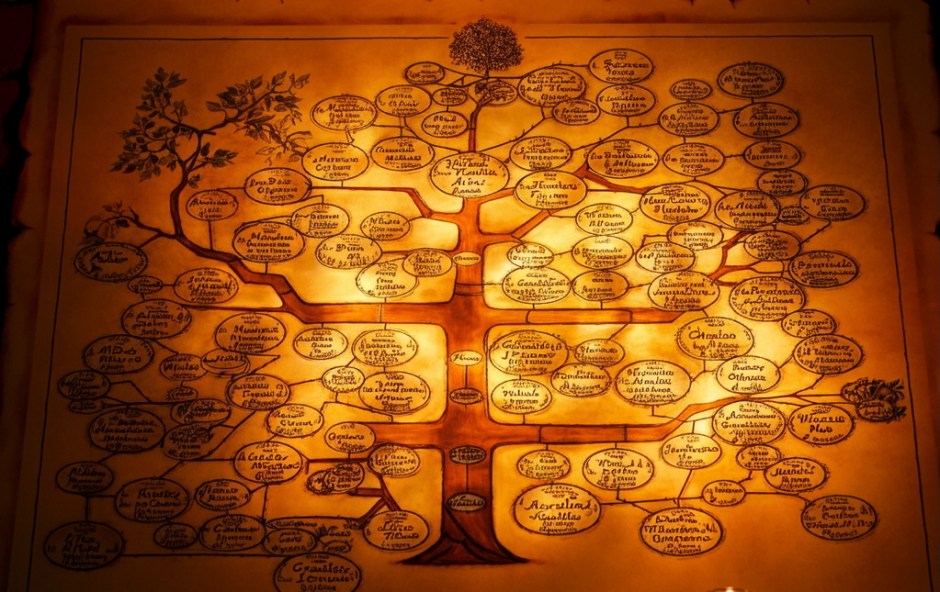
Have you ever tried to construct your family tree? By the time you get to your great-great-great grandparents, you are looking at 32 different people! Each of those 32 people lived individual and likely very different lives, and the 16 pairs of grandparents came together at a point in history to create the family line that led to you.

It’s also crazy to think that it is possible that you are one of 32 people, contributing to the line of your great-great-great grandchild!

Thinking about family trees helps us to reflect on where we came from and what kind of parent you want to be. What impact will you have on your future ancestors?

Matthew 1 starts by showing us Jesus’ family tree. Just like Jesus had a long family line, our children come from a long line of people too. As parents, it’s important to tell our kids where they come from, what values our family has, and what kind of people God wants them to grow up to be. We can learn from our ancestors’ mistakes and victories.

Matthew 1 continues with a short version of Jesus’ birth. When Joseph found out Mary was going to have a baby before they got married, he could have been really upset. But instead of embarrassing Mary or causing problems, he decided to protect her. Parents can learn from Joseph’s kindness. Even when things don’t go as planned, it’s important to respond with love and understanding, providing our kids the unconditional love, safety and security that God provides to us.

Joseph listened when God told him, through an angel, that Mary’s baby was special and would save people. He trusted God, even though it wasn’t easy. As parents, we can teach our kids to listen to God’s guidance and trust that He has a good plan for their lives.

God had a special plan for Jesus, and Joseph helped Jesus grow up to fulfil that plan. We should help our children discover their talents and dreams, and support them as they follow the path that God has for them.

To summarise, Matthew 1 teaches us to help our children understand who they are, where they have come from, show them unconditional love and kindness, trust God, and help them follow their own unique, God-planned purpose.

God made you a parent to reflect His heart, full of unconditional love, so that your child may grow to know and share that love with the world.

John Chapter 6 Simplified: The People Want Miracles And Food, But Jesus Offers Way More

Jesus left to go to Tiberias, which was on the other side of the Sea of Galilee.
A large crowd followed him because they were seeing him healing sick people.
Jesus went up on a hill and sat with his disciples. The Passover, the Jews’ feast, was coming soon.

He looked up and saw a large crowd approaching. He asked Phillip, “Where can we buy bread for them to eat?”
Jesus asked this to test Phillip because he knew what he was about to do.
Phillip replied, “Two hundred coins of bread wouldn’t be enough. Everyone would only get a little bit.”

One disciple, Andrew, Simon Peter’s brother, said, “Here’s a boy with five bread loaves and two fish, but they’re not going to feed everyone.”
Jesus said, “Tell the people to sit down.”
There was a large field of grass, so the people sat down. There were about 5000 of them.
Jesus took the bread, said thanks to God for it, and then passed it to those sitting down. He also gave out as much fish as everyone wanted.
When everyone was satisfied, Jesus said to his disciples, “Get the leftovers so there is no wastage.”

They gathered the leftovers and filled twelve baskets with the pieces from the five bread loaves. The people saw this miracle and said, “This really is the prophet who has arrived in the world.”

Jesus realised they were about to capture him and make him king, so he retreated by himself into the mountains.

In the evening, his disciples went down to the sea, got into a boat and began going to Capernaum on the other side. It was already dark and Jesus still hadn’t joined them.

A strong wind began making the sea rough. The disciples had rowed out quite a distance when they saw Jesus walking on the water near the boat. They were afraid.
Jesus said to them, “It’s me! Don’t be scared.”
They wanted to get him into the boat, but the boat landed at the shore they had been heading to.

The next day, the crowd on the shore saw there were no other boats and Jesus hadn’t gone with them.
Other boats from Tiberias came to the place where they had eaten the bread after the Lord had prayed thanks. The crowds saw Jesus and his disciples weren’t there and got into boats to head to Capernaum to look for Jesus.

The people found Jesus on the other side of the sea and said to him, “Teacher, when did you get here?”
Jesus replied, “I’m honestly telling you, you look for me not because you saw a miracle but because you ate the bread and were satisfied. Don’t work for food that goes bad, but work for the food that leads to everlasting life, which the Son of Man will give you. God the Father guarantees this.”

They asked, “How can we do God’s work?”
“This is God’s work: believe in the one he sent,” Jesus answered.
“What miracles will you perform so we can see and believe you?” they asked, “What are you going to do? Our ancestors ate manna in the wilderness just like it was written; ‘He gave them bread from heaven to eat.'”
Jesus replied, “I’m honestly telling you that Moses didn’t give you bread from heaven. My father is giving you the real bread from heaven because God’s bread is the one who comes from heaven and gives life to the world.”
They said, “Lord, keep giving us this bread.”

Jesus said, “I am the bread of life. The one who comes to me won’t ever get hungry, and those who believe in me will never be thirsty again. I said to you that you have seen me and don’t believe. Everyone who the Father gives me will come to me and the one who comes to me, I’ll never dispose of because I’ve come down from heaven not to do what I want, but what my sender wants.

This is what my sender wants: that I won’t lose anyone he has given me, but I’ll raise them all up on the final day.

This is what my Father wants: that everyone who looks at the Son and believes in him will have eternal life, and I will raise them up on the final day.”

The Jews started complaining about Jesus because he said he was the bread that came down from heaven. They said, “Isn’t this Jesus, Joseph’s son? We know his mum and dad. Why is he saying he has come down from heaven?”

Jesus said to them, “Don’t complain together. No one can come to me unless the Father who sent me attracts them. I will raise them up on the final day. The prophets wrote, ‘They will all be taught by God.’ Everyone who hears the Father and learns, comes to me. No one has seen the Father except the one who comes from God. He has seen the Father. I’m honestly telling you, whoever believes has eternal life. I am the bread of life. Your ancestors ate manna in the wilderness and died. This bread falls from heaven, and whoever eats it doesn’t die. I am the living bread that fell from heaven. Anyone who eats this bread will live forever, and the bread I give for the world’s life is my body.”

The Jews argued together, “How can this man give us his body to eat?”

Jesus said, “I’m honestly telling you, unless you eat the Son of Man’s body and drink his blood, you don’t have life. Whoever eats my flesh and drinks my blood has everlasting life, and I will raise them up on the final day because my body is real food and my blood is real drink. Whoever feeds on my flesh and drinks my body lives in me, and I live in them. The living Father sent me and I live because of him. In the same way, the one who feeds on me will live because of me. This is the bread that fell from heaven, not like what the ancestors ate and died. Whoever feeds on this bread will live forever.”

Jesus said all that while teaching in the Capernaum synagogue, and when his disciples listened, they said, “This message is tricky. Who understands it?”
Jesus knew his disciples were complaining about the message and said to them, “Are you offended by this? What happens if you see the Son of Man come back to where he was before? The Spirit gives life and the body gains nothing. This message I have said is spirit and life, but some of you don’t believe.”

Jesus knew from the start who the non-believers would be and who would betray him. He said, “This message is saying that no one can come to me unless it’s given to him through the Father.”

Because of this message, many of Jesus’ followers went away and didn’t continue walking with him.

Jesus asked his twelve disciples, “Are you also wanting to leave?”
Simon Peter answered, “Lord, who would we go to? You have words of eternal life, and we believe in you. We know you are God’s Holy one.”
Jesus replied, “Didn’t I choose you twelve, but one of you is the devil.”
He was talking about Judas, Simon Iscariot’s son, because Judas, who was one of the twelve, was going to betray him.

John Chapter 6 Summary

Jesus performs two miracles: feeding 5,000 people and walking on water. A crowd follows Jesus because of His healing works. He miraculously multiplies five loaves and two fish feeding over 5,000 people, with left overs. The crowd is amazed and declares Jesus a prophet. Later, the disciples face a storm while crossing the Sea of Galilee. Jesus walks on water to meet them. The following day, Jesus challenges the crowd following him to find spiritual satisfaction instead of physical bread, saying, “I am the bread of life.” He explains that he offers eternal life to those who believe in Him. This teaching is difficult for many to hear, leading some to turn away. Jesus asks if his disciples will also leave, but Peter confirms that Jesus is the Holy One of God, speaking words of eternal life. Jesus then hints at Judas’ coming betrayal.

John Chapter 6 Bible Study Questions and Answers

1. Why do you think the crowd followed Jesus after the miracle of the loaves and fishes?Answer: The crowd experienced a miracle that satisfied their physical needs. They wanted material blessings rather than the deeper spiritual satisfaction that Jesus was offering.

2. What does it mean for Jesus to be the “bread of life” in your own life?
Answer: Jesus is the ultimate source of spiritual satisfaction. Bread satisfies the body, but Jesus satisfies our souls, giving us eternal life and fulfilling our deepest needs.

3. Why did many of Jesus’ followers leave after His difficult teaching on eating his body and drinking his blood?
Answer: Many left because they found the teaching hard to understand or accept. It required them to believe in a deeper spiritual truth about Jesus’ sacrifice, which was not their expectations of what the Messiah would do.

4. How can we find “food that leads to eternal life” in our daily walk with Christ?
Answer: We find this “food” by prioritising a relationship with Christ, studying the bible, and living by believing he will provide for us, instead of focusing on temporary, worldly needs or desires.

5. How does Peter’s declaration that Jesus has the “words of eternal life,” help us in moments of doubt?
Answer: Peter reminds us that, despite difficulties or misunderstandings, Jesus is the only source of eternal truth and being saved. It encourages us to stay committed to Him, even when his teachings are hard to understand.

John Chapter 6 Explained

John 6 begins with miracles that reveal Jesus’ power and care. First, he feeds a crowd of over 5,000 people with only five loaves of bread and two fish. This shows Jesus’ ability to provide abundantly, even from few resources. It also shows that God provides for his people, just like he provided manna for the Israelites in the wilderness (see Exodus). However, unlike the temporary satisfaction of manna, Jesus offers something far greater—spiritual satisfaction that leads to eternal life.

The crowd are amazed by the miracle, recognising Jesus as a prophet. But they misunderstand his mission and want to make him king based on their earthly expectations of how the Messiah was going to come and save them. Jesus, leaves the crowd because his kingdom is not of this world; Jesus did not come to fulfil political or worldly expectations but to eternally save us.

Later, Jesus walks on water to meet His disciples during a storm. This also shows His divine power. His control over the natural world shows that Jesus is Lord over all circumstances. The stormy sea often represents life’s challenges, and Jesus walking on it symbolises his power over every trial we face.

The next day, the crowd look for Jesus again, but he exposes their shallow motives. They are want more miracles and physical food, but Jesus tells them to focus on what truly matters—eternal life. He says, “I am the bread of life.” He invites them to believe in Him as the source of everlasting satisfaction. Food is essential for physical life and Jesus is essential for spiritual life.

This teaching, however, is hard for many people to understand. When Jesus speaks about eating his body and drinking His blood, he is referring to his sacrificial death, where his body would be broken and his blood shed for the forgiveness of sins. The crowd, and even some of his disciples take his words literally and are offended, and many people abandon him. This reveals the cost of following Jesus. It requires belief, especially when his teachings are challenging or unclear.

Jesus’ response to those who complain is profound. He explains that no one can come to him unless brought by the Father. Belief in Christ is not just about thinking. It is a spiritual awakening that enables us to accept Him as Lord and Saviour.

After many people leave, Jesus asks the disciples will also leave. Peter’s response is a confession of faith. Peter recognises that although Jesus’ teachings can be difficult, there is no other source of truth. This highlights the importance of faith in the face of doubt and challenges.

To read the next chapters, you might like to follow or subscribe to this blog!


Continue exploring John 6

If you’d like to read John xx in other translations, here are a few BibleHub links:
For a translation that aims to be word-for-word, try John 6 in the English Standard Version.
For a translation that aims to be more thought-for-thought, try John 6 in the New International Version.
For a translation that aims to communicate the overall meaning, try John 6 in the Contemporary English Version.

If you prefer to read the Bible in a hard-copy format, here are cheaper versions from Amazon:
[These are Amazon affiliate links which support the production of this blog]
For a translation that aims to be word-for-word, ESV Economy Bible
For a translation that aims to be more thought-for-thought, NIV, Economy Bible, Paperback: Accurate. Readable. Clear.
For a translation that aims to communicate the overall meaning, Holy Bible: Contemporary English Version

If you’d like to explore John in more depth, here are two commentaries I would recommend:
[These are Amazon affiliate links which support the production of this blog]
Easy to access commentaries that include life applications:
The NIV Application Commentary: John
For a commentary that goes into more depth:
The Gospel of John (The New International Commentary on the New Testament)