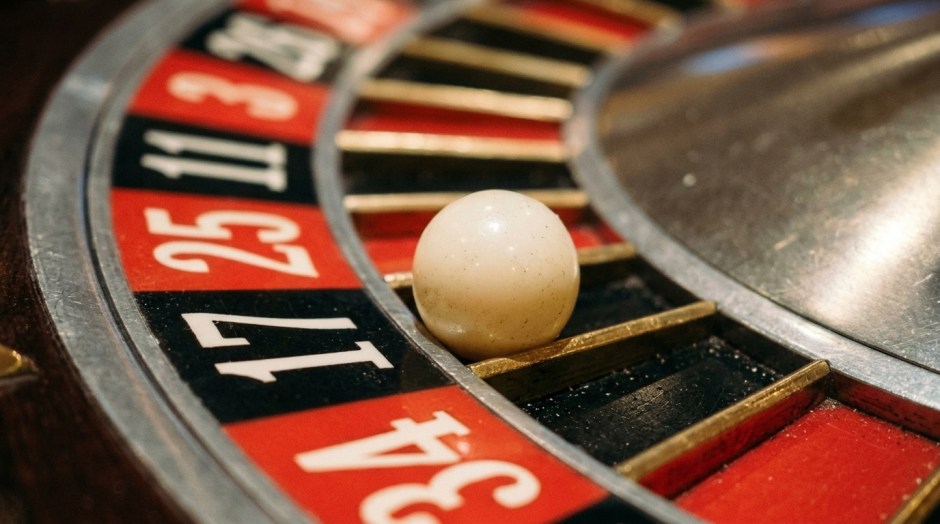
What is gambling? Defined broadly, gambling is risking something of value on an event with an uncertain outcome, with the hope that the value increases. And, for the purposes of this discussion, we’ll keep gambling to be referring to money being the thing of value that people hope will increase. Traditional gambling activities include lotteries, scratch off cards, casino roulette, slot machines, blackjack tables, baccarat, craps, sports betting and other forms of online gambling.
This definition of gambling, however, would also include other activities such as buying speculative assets such as stocks in a company, exchange-traded funds or cryptocurrencies or even Pokemon cards or limited edition sneakers; an asset is purchased with money and the buyer expect to sell that asset for more money in the future. Would we even be correct to include other life assets such as houses if we buy a house with the hope that the market is favourable and the value of the house rises? Some people spend money on renovations to increase a house’s value with the hope of selling the house for more money in the future.
So are any of the above-mentioned gambling activities sinful? Are all of them sinful? There are some Christians who feel quite strongly that gambling is a sin, but rarely are able to define when it is a sin and when it is not a sin, and this is probably because of the bible’s lack of explicit guidance on the topic.
What is sin? Some interpret sin in a behavioural, legal sense of doing things that God ask us not to do, for example 1 John 3:4: “Everyone who sins breaks the law; in fact, sin is lawlessness.” If we take the Bible as being authoritative about telling us what is and is not sinful, that what is and is not against God, we unfortunately draw short, in that the Bible does not make any explicit, legal prohibition against gambling.
There are many instances where chance-based games or throwing lots are used to make decisions (e.g., 1 Samuel 14:41, Jonah 1:7, Proverbs 18:18). When Jesus is crucified, the soldiers also gamble for keeping parts of Jesus’ clothes, and it is not made clear what their purpose is in keeping Jesus’ clothes. But these activities, again, are not about betting things of value on the hope that the value increases. There is still no explicit teachings anywhere in the Old or New Testament, so from this we can conclude that gambling in itself is not behaviourally, legally prohibited like other harmful activities.
A definition of Sin, however, can be expanded to include anything that goes against God’s will, what he wants us to do, and God’s moral law. Towards the end of the book of Matthew, Jesus is asked by people what is and is not lawful. Jesus provides a summary when someone asks which law is the most important, and Jesus replies:
“‘Love the Lord your God with all your heart and with all your soul and with all your mind.’ This is the first and greatest commandment. And the second is like it: ‘Love your neighbour as yourself.’ All the Law and the Prophets hang on these two commandments.” (Matthew 22:37-40)
The implication of this is that the legal command of what is sin is based on whether the behaviours result in us not loving God or the people around us. It is from this teaching that we can make implicit decisions about under what circumstances gambling may harm our own relationship with God, or even harm other people.
The most clear way that money harms ourselves is when we put money as being the solution to our issues, or even seen as the thing that will solve all our issues in place of God. We need to very be very mindful that we are not making decisions as if we are God, because if we are acting as if God, then we won’t recognise the need for a relationship with God. Matthew 6:24 says you cannot serve God and money, showing that people seeing money as a god was as prevalent in the days of the early Christians as it is today.
1 Timothy 6:9-10 also Is clearly written to a group of people who were struggling with money issues, comma with the author teaching that money and those who desire to have money are more likely to fall into temptation and that money is the root of all kinds of evil; not all evil as some people misattribute, but there is plenty of evil that I’m sure we don’t need to go into for which money is a motivator
Money can also harm others when we take resources for ourselves that could have helped other people. For example, to illustrate, if you had $1,000 and were about to walk into the casino, but outside the casino you saw an unhoused person who needed money for something to eat, With depriving that person of a meal to eat then be crossing into sinful territory, for not showing love to one of God’s children? In his letter to the Ephesians, Paul teaches them to work honestly and work hard so that they can share their resources around (Ephesians 4:28), not so that they can take him to the local betting shop.
Here’s a bit of a checklist to start praying and considering whether your gambling behaviours are crossing into sin territory and might need some help from a mental health professional or spiritual leader who has experience in helping people overcome behavioural addictions:
- Can I be completely honest about how I use money with others?
- Do I turn to gambling when I am feeling down, depressed or anxious?
- Am I often thinking about having more money?
- Are other people going with less because I want more?
- Deep down, do I want to stop?
Gambling help in Australia: https://www.gamblinghelponline.org.au/
Gambling help in United States: Call 1-800-MY-RESET

